


| Previous day | 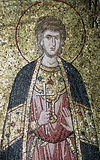
|
Next day |
| Old Style
July 29
|
Monday |
New Style
August 11
|
| 10th Week after Pentecost. Tone 8. |  No fast.
|
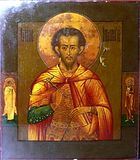
 Martyr Callinicus of Gangra, in Asia Minor (ca. 250).
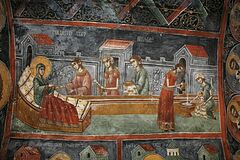
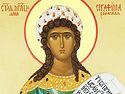
Virgin-martyr Seraphima (Serapia) of Antioch (117-138). Nativity of St. Nicholas the Wonderworker, archbishop of Myra in Lycia (3rd. c.). Martyr Theodota and her three sons, in Bithynia (ca. 304). St. Lupus the Confessor, bishop of Troyes (Gaul) (479). Martyr Eustathius of Mtskheta, Georgia (589). Sts. Constantine and Cosmas, abbots, of Kosina (Stara Rus) (13th c.). St. Romanus, founder of Kirzhach Monastery, disciple of St. Sergius of Radonezh (1392). Martyr Daniel Kushnir of Mlievich (Ukraine) (1766).
New Hieromartyrs Seraphim (Bogoslovsky) and Theognostus (Pivovarov), hieromonks of a skete at Kyzyl-Zharskoe (Kazakhstan) (1921). New Hieromartyr Anatole (Smirnov), hieromonk and hermit of the Caucasus Mountains, Abkhazia (1930-1935). New Hieromartyr Pachomius (Rusin), hieromonk, of Alma Ata (Kazakhstan) (1938).
St. Theodosius the Younger, emperor (450). St. Constantine I, patriarch of Constantinople (676). St. Olaf, king of Norway (1030). Hieromartyr Bessarion of Smolyan, Bulgaria (1670).
Repose of Archpriest Georges Florovsky (1979).
Thoughts for Each Day of the Year
According to the Daily Church Readings from the Word of God
By St. Theophan the Recluse

Monday. [I Cor. 15:12-19; Matt. 21:18-22]
The Lord condemned the fig tree to fruitlessness because in appearance it was so covered with leaves that there ought to have been fruit on it; however, none could be found. In applying this to the Christian life, the leaves represent outward works of piety and outward spiritual feats, while the fruits represent inner dispositions. This is a law: the former should proceed from the latter. But out of condescension for our infirmity, the latter should in any case develop together with the former. When the former are strong but the latter are not even budding, a lie of life results, which expresses itself like this: to seem, but not to be. At first this unfortunate state is perhaps not in one’s thoughts, but then it appears unnoticeably and establishes itself as a way of life. When one applies himself excessively to externals and becomes passionately attached to them, his attention toward his heart is suppressed, his spiritual feelings die away, and coldness settles in. At this stage spiritual life freezes, and there remains only an appearance of piety, but no piety. The behaviour is proper on the outside, but inwardly to the contrary. The consequence of this is spiritual fruitlessness–deeds are done, but they are all dead.
Articles
 Martyr Callinicus of Gangra in Asia MinorThe Holy Martyr Callinicus, a native of Cilicia, was raised from childhood in the Christian Faith. |
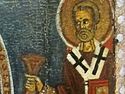
 A Strange Miracle of St. Nicholas in 1956A true incident which shocked and brought repentance to hundreds of people in the Russian Soviet city of Kuibyshev (modern day Samara), in the year 1956. |
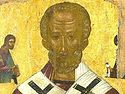
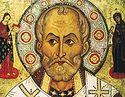
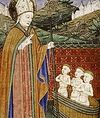
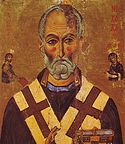
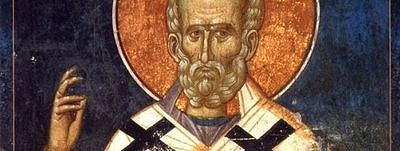 St. Nicholas |
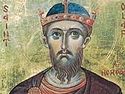 Holy Passion-Bearer King Olav II of NorwayThere were many royal Olavs in Scandinavia, but none so glorious and holy as Olav Haraldson, successor to Olav Tryggvason (King Olav I of Norway). |
 Orthodoxy in ScandinaviaMatthew HartleyGreat courage and perseverance were called for in the evangelization of those lands, and God raised up saints more than equal to the challenge. |