| Previous day | 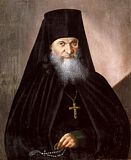
|
Next day |
| Old Style
September 7
|
Saturday |
New Style
September 20
|
| 15th Week after Pentecost. Saturday before the Exaltation of the Cross. Tone 5. |  No fast.
|
 Forefeast of the Nativity of the Theotokos.
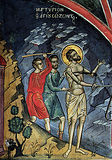
  Martyr Sozon of Cilicia (304).
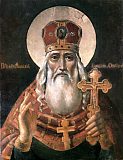
  St. John, archbishop and wonderworker, of Novgorod (1186). Hieromartyr Macarius of Kanev, archimandrite, of Obruch and Pinsk (1678). St. Macarius, elder, of Optina Monastery (1860).
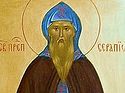
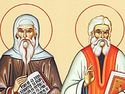
Apostles Evodus (Euodias) (66) and Onesiphorus (67), of the Seventy. Martyr Eupsychius of Caesarea in Cappadocia (ca. 130). St. Luke and St. Peter the Cappadocian, abbots, of the monastery of the Deep Stream (10th c.). Sts. Alexander (Peresvet) and Andrew (Oslyabya), disciples of St. Sergius of Radonezh, who fought at the Battle of Kulikovo (1380). St. Serapion of Spaso-Eleazar Monastery, Pskov (1480)
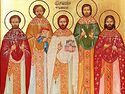
New Hieromartyrs Eugene (Zernov), metropolitan of Nizhni- Novgorod, Leo (Yegorov), archimandrite, of the St. Alexander Nevsky Lavra, Nicholas (Ashchepev), abbot, of the Holy Trinity Selinginsk Monastery, Eugene (Vyzhva), abbot, of Zhitomir (Ukraine), Pachomius (Ionov), hieromonk of the Holy Trinity Skanov Monastery (Penza), and Stephen (Kreidich), priest, of Robchik (Bryansk) (1937). New Hieromartyr Vasily Sungurov, priest, of Shchelkovo (Moscow) (1937). New Hieromartyr John Maslovsky, priest, of Verkhne-Poltavka, Amur (1921).
Sts. Symeon (1476) and Amphilochius (1570), of Pangarati Monastery (Romania). St. Cloud (Clodoald), founder of Nogent-sur-Seine Monastery, near Paris (560). St. Cassia (Cassiana) the Hymnographer (9th c.).
Repose of Metropolitan Isidore (Nikolsky) of St. Petersburg (1892) and Archbishop Anatole (Kamensky) of Irkutsk (1925).
Thoughts for Each Day of the Year
According to the Daily Church Readings from the Word of God
By St. Theophan the Recluse

Saturday. [I Cor. 4:17-5:5; Matt. 24:1-13]
Because iniquity shall abound, the love of many shall wax cold. Love is destroyed by transgressions; the more sins, the less love. Where there is all sin, do not seek love. Therefore, he who seeks the spread of love and curtailment of lack of love ought to be concerned with decreasing sin and cutting short the sin-loving realm. This is the true foundation for humanism! Having taken up this work, one must use all means to oppose sin. External sins are the fruit of inner sinfulness. Inner sinfulness is rooted in egoism and its offspring. Consequently, humanists need to make it a rule for themselves to suppress egoism by all means; egoism is suppressed most forcefully by not allowing one’s own will. Do not allow yourself to have your own will, and soon you will overcome egoism. On the contrary, no matter what means you want to use against egoism, you won’t be able to do anything with it if you give freedom to your will. It would follow that wherever people seek their own little will, they are seeking an expansion of egoism and the waxing cold of love—and they are seeking the greater evil. Yet such is the spirit of the current time—and evil is growing.
Articles
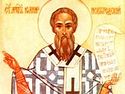
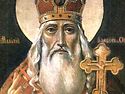 Martyr Macarius the Archimandrite of Kanev and PereyaslavlThe Hieromartyr Macarius of Kanev lived in the seventeenth century. This was a most terrible time for Orthodox Christians in western Rus. |
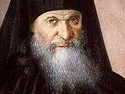
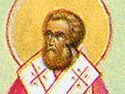 Apostle Evodius (Euodias) of the SeventyThe Holy Apostle Evodius of the Seventy was, after the holy Apostle Peter, the first bishop in Syrian Antioch. |
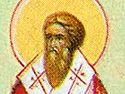 Apostle Onesiphorus of the SeventySaint Onesiphorus was bishop at Colophon (Asia Minor), and later at Corinth. |