| Previous day | 
|
Next day |
| Old Style
September 9
|
Monday |
New Style
September 22
|
| 16th Week after Pentecost. Tone 6. |  No fast.
|
 Afterfeast of the Nativity of the Theotokos.
  Holy and Righteous Ancestors of God Joachim and Anna. Martyr Severian of Sebaste (320).
  St. Joseph, founder of Volokolamsk (Volotsk) Monastery (1515). Uncovering and translation of the relics of St. Theodosius, archbishop of Chernigov (1896).
St. Theophanes, confessor and faster, of Mt. Diabenos (299). Commemoration of the Third Ecumenical Council (431). Blessed Nicetas the Hidden, of Constantinople (12th c.). St. Onuphrius of Vorona, Moldavia (1789).
New Hieromartyr Zachariah (Lobov), archbishop of Voronezh (1937). New Hieromartyr Andronicus (Surikov), hieromonk, of Moscow (1938)
St. Kieran (Ciaran) of Clonmacnois (Ireland) (ca. 545). St. Omer, bishop of Therouanne (670). St. Joachim, founder of Opochka Monastery (Pskov) (ca. 1550). St. Joachim, monk of the St. Nicholas- Shartomsk Monastery in Suzdal (1625). St. Cyriacus of Tazlau Monastery, Moldavia (1660).
Repose of Elder Joachim of St. Anne’s Skete, Mt. Athos (1950).
Thoughts for Each Day of the Year
According to the Daily Church Readings from the Word of God
By St. Theophan the Recluse

Monday. [Gal. 4:28-5:10; Mark 6:54-7:8]
The Lord rebukes the Pharisees not for their external routines and rules of conduct, but for partiality toward them—for limiting themselves to external worship of God, with no concern for what was in the heart. It is impossible to be without externals. The highest internal things require the external as their expression and garment. In reality, internal things are never alone, but are always united with the outer; only in false theories are they separated. But again it is obvious that externals alone are nothing; their worth comes from the presence of the internal things contained in them. Thus, once the internal ceases to be, the external might as well not be there. Meanwhile, we have a weakness for outward appearances in which the internal is depicted and takes definite form, to such an extent that we are satisfied with fulfilling them alone, without even thinking that there might be internal things. And since the internal is harder to attain than the external, it is quite natural to get stuck on the latter, not striving for the former. What can we do? We must govern ourselves and keep the internal things in mind, always pushing ourselves toward them through the externals, only considering a work to be real when the internal and external are united in it. There is no other way. Attentiveness toward oneself, soberness, and vigilance are the only levers for raising up our nature which is fat and has a penchant for lowly things. Notice that those who possess the internal never abandon the external, though they consider it to be of no particular value.
Articles
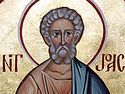
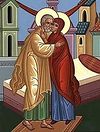
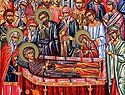
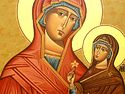 Holy, Righteous Ancestor of God, AnnaSaint Anna was the daughter of Matthan the priest, who was of the tribe of Levi. St Anna’s family came from Bethlehem. |
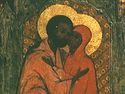
 Martyr Severian of SebasteThe Holy Martyr Severian suffered for Christ in Armenian Sebaste during the governorship of Licius, when Christians were persecuted under the emperor Licinius. |
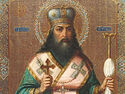 St. Theodosius Of ChernigovSt Theodosius’ ascetic way of life and the secret help which he extends to all who raise up prayers to him bear witness to the grace-filled gifts he acquired. |
 Blessed Nicetas the Hidden of ConstantinopleSaint Nicetas the Hidden lived at Constantinople and occupied the position of “chartolarium” (“letter-writer”). |