| Previous day | 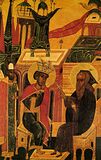
|
Next day |
| Old Style
November 19
|
Tuesday |
New Style
December 2
|
|
26th Week after Pentecost.
Tone 8.
Nativity Fast. |
 Fish, wine and oil allowed.
|
 Prophet Obadiah (Abdias) (9th c. b.c.). Martyr Barlaam of Caesarea in Cappadocia (304).
  Sts. Barlaam, monk, Ioasaph, prince of India, and Abenner the King, father of St. Ioasaph (4th c.).
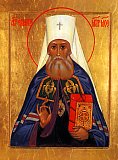
  St. Philaret, metropolitan of Moscow (1867).
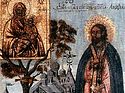
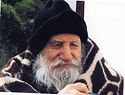
Martyr Heliodorus, in Pamphylia (ca. 273). Martyrs Azes of Isauria and 150 soldiers (284). Martyr Agapius of Gaza (284-305). St. Hilarion of Georgia, wonderworker of Thessalonica (875). St. Barlaam, first abbot of the Kiev Caves (1065). Uncovering of the relics of Hieromartyr Adrian, founder of Poshekhonye Monastery (Rostov) (1625). St. Ioannicius, schemaarchimandrite, of Glinsk Hermitage (1914). St. Porphyriоs of Kapsokalyvia and Kallisa (1991).
New Hieromartyrs Porphyrius (Gulevich), bishop of Simferopol, Ioasaph (Udalov), bishop of Chistopol, Michael (Kvanin), archimandrite, of Moscow, Gennadius (Rebeza), archimandrite, of Odessa, Gerasim (Sukhov), hieromonk, of Kazakhstan, Michael Dimitrev, archpriest, of Selishchi (Ryazan), John Malinovsky, archpriest, of Noviye Gorki (Ivanovo), Sergius Makhaev, archpriest, of Bogorodsk (Moscow), Constantine Mikhailovsky, archpriest, of Mordovia, James Perederiy, archpriest, of Velbovka (Kharkov), and Alexander Serebrov, archpriest, of Simbirsk (1937). New Hieromartyrs Ioasaph (Krymzin), abbot, and Peter (Mamontov), hieromonk, both of the Holy Transfiguration Guslitsky Monastery (Moscow) (1937). New Hiero-confessor Alexis (Kabaliuk), schema-archimandrite, of Khust (Carpatho-Russia) (1947).
St. Patroclus of Bourges (577). St. Egbert, archbishop of York (766). St. Simon, wonderworker of Calabria (10th c.).
Repose of Elder Cleopa of Sihastria, Romania (1998).
Thoughts for Each Day of the Year
According to the Daily Church Readings from the Word of God
By St. Theophan the Recluse

Tuesday. [I Tim. 5:11-21; Luke 17:26-37]
Whosoever shall seek to save his life shall lose it; and whosoever shall lose his life shall preserve it. One must understand it this way: to save your life means to pity yourself, while to lose your life means not pitying yourself—that is, on the path of the Lord’s commandments, or in working for the Lord. So, it is like this: he who works for the Lord, fulfilling His commandments without pitying himself, is saved; but he who pities himself, perishes. If you pity yourself you will unfailingly be found as a transgressor of the commandments and, consequently, an unprofitable servant; and what is the sentence for an unprofitable servant? Cast ye the unprofitable servant into outer darkness: there shall be weeping and gnashing of teeth (Matt. 25:30). Make an effort to watch yourself if only for a single day, and you will see that self-pity distorts all of our [good] deeds and kills the desire to do them. Without labour and effort, you will not be able to do anything; but if you regret forcing yourself—it all stops there. There are things which you must do, whether you want to or not. Such things are done without fail, difficult as they may be. But here self-pity is overcome by self-pity. If you don’t do them, there will be nothing to eat. But since what is required by the commandments are not of such nature, they are always omitted out of s elf-pity. You make condescensions to yourself when it comes to bad deeds, also out of self-pity. You hate to refuse yourself what you want and so the desire is fulfilled, even though it is either outright sinful, or will lead to sin. Thus it always goes with one who pities himself—what he should do, he does not, and what he should not do, he indulges himself in doing; and he ends up good for nothing. What salvation can there be here?
Articles
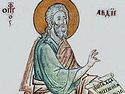 Prophet Obadiah (Abdia)The Holy Prophet Obadiah [or Abdia] is the fourth of the Twelve Minor Prophets, and he lived during the ninth century B.C. |
 Martyr Heliodorus in PamphyliaThe Holy Martyr Heliodorus lived during the reign of the emperor Aurelian (270-275) in the city of Magidum (Pamphylia). |
 Venerable Barlaam the Abbot of the Kiev Near CavesSaint Barlaam, Igumen of the Kiev Caves, lived during the eleventh century at Kiev, and was the son of an illustrious noble. |