| Previous day | 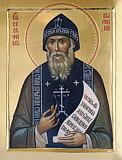
|
Next day |
| Old Style
March 21
|
Friday |
New Style
April 3
|
|
Sixth Week of Great Lent (Palm Week).
Tone 1.
Great Lent. |
 Monastic rule: xerophagy (bread, uncooked fruits and vegetables).
|
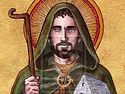
 St. James the Confessor, bishop, of the Studion (8th c.-9th c.). St. Seraphim of Vyritsa (1949).
St. Cyril, bishop of Catania (1st c.-2nd c.). St. Thomas, patriarch of Constantinople (610). St. Pachomius, abbot, of Nerekhta (1384).
St. Beryllus, bishop of Catania (2nd c.). St. Serapion, bishop of Thmuis, Egypt (ca. 358). St. Lupicinus, desert-dweller, of the Jura Mountains (Gaul) (480). St. Enda, monk, of Aran (Ireland) (530). St. Sophronius, abbot, of the monastery of St. Theodosius in Palestine (542). New Martyr Michael of Agrapha, at Thessalonica (1544). Martyrs Philemon and Domninus of Rome. St. Serapion the Sindonite, monk, of Egypt (5th c.).
Thoughts for Each Day of the Year
According to the Daily Church Readings from the Word of God
By St. Theophan the Recluse

Friday.
The holy 40 days of Great Lent have come to an end! Now each of you sit and calculate the result—what was there in the beginning and what is there now? There was buying, so what are the gains? Is there at least a small profit? We have stepped into the arena: so, did we run, and having run, did we achieve what we expected? A struggle was announced: so, did we arm ourselves, did we fight, and having fought did we fall, or conquer? Attentive and vigilant fasters, having laboured with contrite and humbled hearts, upon looking back cannot but rejoice. However, for us, careless and flesh-pleasing, concerned only with fleshly comforts and things that please us, there is always only shame. But even this is lacking. Some take a beating but feel no pain, because they have a copper forehead and an iron neck.
Articles
 St. James the Confessor the Bishop of CataniaSaint James, Bishop and Confessor,was inclined toward the ascetic life from his early years. |


 St. Cyril the Bishop of CataniaSaint Cyril was born in Antioch. He was a disciple of the Apostle Peter (June 29, January 16), who installed him as Bishop of Catania in Sicily. |