


| Previous day | 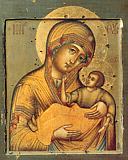
|
Next day |
| Old Style
April 12
|
Saturday |
New Style
April 25
|
| 2nd Week after Pascha. Tone 1. |  No fast.
|
St. Basil the Confessor, bishop of Parium (754).
Hieromartyr Zeno, bishop of Verona (ca. 260). St. Isaac the Syrian, abbot, of Spoleto, Italy (550). Monk-martyrs Menas, David, and John, of Palestine (after 636). Virgin Anthusa of Constantinople (801). St. Athanasia the Wonderworker, abbess, of Aegina (860).
Pochaev Icon of the Most Holy Theotokos. Meeting of the Most Holy Theotokos and St. Elizabeth. Deposition of the Cincture [Sash] of the Most Holy Theotokos in Constantinople (942).
Martyr Sabbas the Goth, at Buzau in Wallachia (372). St. Gennadius, steward of Vatopedi, Mt. Athos (14th c.). St. Sergius II, patriarch of Constantinople (1019). St. Basil, bishop of Ryazan (1295). St. Acacius of Kapsokalyvia Skete, Mt. Athos (1730).
Repose of Archbishop Juvenal of Vilnius, Lithuania, monk of Optina Monastery (1904).
Thoughts for Each Day of the Year
According to the Daily Church Readings from the Word of God
By St. Theophan the Recluse

Saturday. [Acts 5:21–33; John 6:14–27]
What Peter and John first said to the authorities, later all the apostles said to the authorities: We ought to obey God rather than men. The God of our fathers raised up Jesus, whom ye slew and hanged on a tree. Him hath God exalted with His right hand to be a Prince and a Saviour, for to give repentance to Israel, and forgiveness of sins. And we are His witnesses of these things; and so is also the Holy Ghost, whom God hath given to them that obey Him (Acts 5:29–32). What sincerity, fullness, definiteness and clarity of confession! God arranged in such a way for the Crucified to be our Saviour through the forgiveness of sins in repentance. The witnesses are the Apostles as observers, and the Holy Spirit, manifestly acting in the apostles and in all believers. The same witnesses are powerful through to our own days. What the holy Apostles say is the same as if we ourselves saw and heard it with our eyes and ears. And the Spirit of grace acts uninterruptedly in the holy Church, in miracle-working, in the conversion of sinners, and especially in the transformation of those earnestly working for the Lord, in their sanctification and filling with obvious grace-filled gifts. The transformation of people gives great power to miracle-working, and these together are powerful in forming a firm conviction of the truth of Christ, in all truth-loving souls. Thanks be to the God of truth, Who hath revealed His truth to us so clearly!
Articles

 Hieromartyr Zeno the Bishop of VeronaSaint Zeno, Bishop of Verona, was born a Greek and came from Syria. In his youth he became a monk and devoted himself to the study of Holy Scripture. |

 Monk-martyrs Menas, David, and John, of PalestineThey were martyred in the seventh century by Arabs. |
 The Venerable Anthusa of ConstantinopleThe holy princess Anthusa of Constantinople was the daughter of the Iconoclast emperor Constantine Copronymos (reigned 741-775) and his third wife Eudokia. |
 Venerable Athanasia the Abbess of AeginaSaint Athanasia was abbess of a monastery on the island of Aegina in the ninth century. |
