


| Previous day | 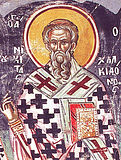
|
Next day |
| Old Style
May 28
|
Wednesday |
New Style
June 10
|
|
2nd Week after Pentecost.
Tone 8.
Fast of the Holy Apostles. |
 Monastic rule: xerophagy (bread, uncooked fruits and vegetables).
|
 St. Nicetas the Confessor, bishop of Chalcedon, with his kinsmen Sts. Nicetas and Ignatius (9th c.)
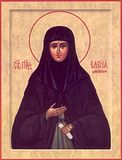
  St. Ignatius, bishop and wonderworker of Rostov (1288). St. Helen (Manturova), nun of Diveyevo (1832).
Hieromartyr Eutychius, bishop of Melitene (1st c.). Martyr Heliconis of Thessalonica (244). St. Germanus, bishop of Paris (576). Hieromartyr Helladius, bishop (6th c.-7th c.). St. Gerontius, metropolitan of Moscow (1489). Blessed Domnica (Likvinenko), ascetic, of Kherson (1967).
New Hieromartyrs Macarius (Morzhov), hieromonk of Zosima Hermitage (Smolensk), and Dionysius (Petushkov), hieroschemamonk of the St. Nilus of Stolobny Hermitage (Tver) (1931). New Confessor Heraclius (Motyakh), schemamonk, of Turkistan (1936). New Hiero-confessor Rodion (Fyodorov), archimandrite, of the Holy Trinity–St. Sergius Lavra (1933).
Martyrs Crescens, Paul, and Dioscorides, of Rome (326). St. Alexander, bishop of Thessalonica (4th c.). St. William, monastic founder, of Gellone (Gaul) (812). St. Sophronius, monk, of Bulgaria (1510). New Martyr Mitros (Demetrius) of Tripolitsa (1794). Blessed Andrew, fool-for-Christ, of Constantinople (911) New Hieromartyr Zachariah, priest of Prusa (1802).
Thoughts for Each Day of the Year
According to the Daily Church Readings from the Word of God
By St. Theophan the Recluse

Wednesday. [Rom. 4:13–25; Matt. 7:21–23]
Not everyone that saith unto me, Lord, Lord, shall enter into the kingdom of heaven; but he that doeth the will of my Father which is in heaven (Matt. 7:21). You will not be saved through prayer alone; you must unite with prayer fulfilment of the will of God—all that lies upon each person according to his calling and way of life. And prayer should have as its subject primarily the request that God enable us not to depart in any way from His holy will. Conversely, he who is zealous to fulfil God’s will in all things has boldness in prayer before God and greater access to His throne. Moreover, prayer that is not accompanied by walking in God’s will is often not true, sober and heartfelt prayer, but only external reading, during which one’s moral dysfunction is concealed by a multitude of words like a mist, while the thoughts are actually disorderly and wandering. Both must be made orderly through piety, and then there will be fruit.
Articles
 St. Nicetas the Bishop of ChalcedonSaint Nicetas, Bishop of Chalcedon, lived during the second half of the eighth century. For his God-pleasing life he was consecrated as Bishop of Chalcedon. |
 St. Ignatius the Bishop and Wonderworker of RostovSaint Ignatius was Bishop of Rostov, and shepherded his flock for twenty-six years. |