


| Previous day | 
|
Next day |
| Old Style
June 20
|
Friday |
New Style
July 3
|
|
5th Week after Pentecost.
Tone 3.
Fast of the Holy Apostles. |
 Monastic rule: xerophagy (bread, uncooked fruits and vegetables).
|
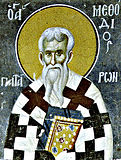
 Hieromartyr Methodius, bishop of Patara (or Olympus) in Lycia (312). Right-believing Prince Gleb Andreyevich of Vladimir (1175).
Translation of the relics of Martyrs Inna, Pinna, and Rimma (1st-2nd c.), Scythian disciples of Apostle Andrew, to Alushta (Crimea) (1st c.-2nd c.). Hieromartyrs Aristocleus, priest, the deacon Demetrian, and the reader Athanasius, at Salamis on Cyprus (ca. 306). St. Leucius the Confessor, bishop of Brindisi (5th c.). St. Minas, bishop of Polotsk (1116). St. Nicholas (Cabasilas) (ca. 1397). Translation of the relics of St. Gurias, archbishop of Kazan (1630).
New Hieromartyr Nicholas Florov, archpriest, of Kobra (Vyatka) (1933).
Martyrs Paul, Cyriacus, Paula, Felicilana, Thomas, Felix, Martyrius, Vitaly, Crispinus, and Emilius, in Tomis, Moesia (290). Blessed Studius, founder of the Studion Monastery (5th c.). St. Florentina, abbess, of Spain (ca. 636). St. Nahum of Ochrid, enlightener of the Bulgarians (910). Translation of the relics and garments of Apostles Luke, Andrew, and Thomas, Prophet Elisha, and Martyr Lazarus to the Church of the Holy Apostles in Constantinople (960). St. Callistus I, patriarch of Constantinople (1363). Finding of the relics of New Hieromartyr Raphael, hieromonk, of Mytilene (1959).
Thoughts for Each Day of the Year
According to the Daily Church Readings from the Word of God
By St. Theophan the Recluse

Friday. [Rom. 16:1-16; Matt. 13:4-9]
The parable about the sower depicts various relationships of souls toward the word of God. In the first group stand those who do not heed the word at all. They hear, but what is heard does not enter into their soul; it lies on its surface, like the seed by the wayside. The word does not fit in them because they have another way of thinking, other principles, other tastes. That is why it soon disappears from memory, is forgotten as if it was not heard at all. The second group is of those who hear the word willingly and receive it quickly, but do not want to bear any labour to fulfil it. Therefore, they delight in the word—especially its promises—until a sacrifice is required. As soon as the necessity arises to sacrifice something for faithfulness to the word, they betray it, renouncing both the word and its promises in order to cater to their attachments. The third group is of those who receive the word and begin to live according to it, but then give themselves over to many cares and sorrows of the world, to earthly concerns, which suppress all the good undertakings which had just formed under the influence of the word of God. The fourth group is of those who receive the word with full faith and resolve to live according to its requirements, with a readiness for all sacrifices and labour, and do not allow their heart to be tied to anything earthly. Sit and decide each of you, to which of these groups you belong.
Articles
 Hieromartyr Methodius the Bishop of PataraThe Hieromartyr Methodius, Bishop of Patara (Lycia in Asia Minor), was distinguished for his genuine monastic humility. |
 Blessed Prince Gleb Andreevich the Son of St Andrew BogoliubskyHoly Prince Gleb of Vladimir, named George in holy Baptism, was a younger son of the holy Prince Andrew Bogoliubsky (July 4). |
 The Holy Martyrs Inna, Pinna and RimmaThe Holy Martyrs Inna, Pinna and Rimma were Slavs from northern Scythia (modern Bulgaria), and they were disciples of the holy Apostle Andrew the First-Called. |
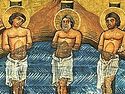 The First Russian Saints: Inna, Pinna and RimmaNikolai SolntsevTo glorify the first national saints and pray to them is our duty and honor. |
 St Leucius the Bishop of BrindisiSaint Leucius the Confessor was born in the city of Alexandria of pious parents named Eudykius and Euphrosyne. They gave their son the name Eutropius. |
 St Menas, Bishop of PolotskSaint Menas, Bishop of Polotsk led an ascetical life at the Kiev Caves monastery. On December 13, 1105 he was consecrated Bishop of Polotsk. |


