


| Previous day | 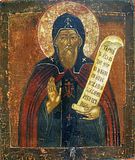
|
Next day |
| Old Style
June 28
|
Saturday |
New Style
July 11
|
|
6th Week after Pentecost.
Tone 4.
Fast of the Holy Apostles. |
 Fish, wine and oil allowed.
|
 Translation of the relics of the Holy Wonderworking Unmercenaries and Martyrs Cyrus and John (412).
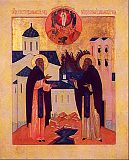
  Sts. Sergius and Herman, founders and abbots of Valaam (14th c.).
St. Xenophon, founder of Robeika Monastery (Novgorod) (1262). St. Paul the Physician, of Corinth (7th c.). St. Heliodorus, schema-archimandrite of Glinsk Hermitage (1879).
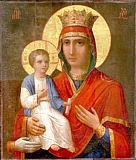
Icon of the Most Holy Theotokos “Of the Three Hands” of Hilandar, Mt. Athos (8th c.).
St. Senuphius the Standard-bearer, of Egypt (late 4th c.). St. Austell of Cornwall (6th c.). St. Theodichildis (Telchildis), abbess, of Jouarre (Gaul) (ca. 660). St. Sergius the Magistrate, of Paphlagonia, founder of the Nikitiatus Monastery in Nicomedia (866). St. Sophrony (Sakharov) of Essex (1993).
Repose of Archimandrite Methodius (Popovich) of Jerusalem (1997).
Thoughts for Each Day of the Year
According to the Daily Church Readings from the Word of God
By St. Theophan the Recluse

Saturday. [Rom. 9:1-5; Matt. 9:18-26]
The woman with the issue of blood said: If I may but touch His garment, (the Lord’s), I shall be whole, and she received healing according to her faith. We, the sensual, need physical contact in order to receive intangible strength. The Lord arranged things this way. His holy Church has a visible structure. Its various parts embrace us and we touch them. The power of God, found inside the Church, is received through such contact by those who have a receiver—faith, which says: “If I may but touch, I shall be made whole.” The Church is the body and garment of the Lord. The most visible parts, which we touch, are the Divine Mysteries, particularly baptism and Chrismation, the Sacrament of the Lord’s Body and Blood in conjunction with the Sacrament of confession. But contact with all the other aspects can draw needed strength from the Lord, Who is everywhere. He sees each person who does this, and says to his heart, “Be bold, my child!” Free-thinkers, antagonistic toward the external rites of the Church, thus deprive themselves of the opportunity to enter into contact with the inner, divine, all-animating power. This is why they remain sick, and exhausting themselves with the flow of vain thoughts and feelings, they dry up spiritually and die.
Articles

 Wonderworker and Unmercenary CyrusSaint Cyrus was a noted physician in the city of Alexandria, where he had been born and raised. |


 Venerable Sergius the Wonderworker of ValaamSaints Sergius and Herman settled on the island of Valaam in 1329. |
 Venerable Herman the Wonderworker of ValaamSaints Sergius and Herman settled on the island of Valaam in 1329. The brethren gathered by them spread the light of Orthodoxy in this frontier land. |
 Venerable Xenophon the Abbot of Robeika, NovgorodSaint Xenophon of Robeika was a student of St. Barlaam of Khutyn. |


