


| Previous day | 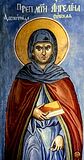
|
Next day |
| Old Style
July 1
|
Tuesday |
New Style
July 14
|
| 7th Week after Pentecost. Tone 5. |  No fast.
|
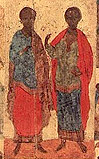
 Holy and Wonderworking Unmercenaries Cosmas and Damian, martyrs, at Rome (284).
Martyr Potitus, at Naples (2nd c.). St. Peter the Patrician, monk, of Constantinople (854). St. Angelina (Brancovic), despotina of Serbia (16th c). Sunday of All Saints of Galicia. Sunday of All Saints of Poland. Sunday of All Saints of Odessa. Sunday of All Saints of Britain and Ireland. Sunday of All New Martyrs of the Turkish Yoke. Sunday of All Saints of Dorostolum.
Sts. Julius and Aaron, protomartyrs of Wales, at Caerleon (ca. 304). St. Gallus, bishop of Clermont (551). St. Eparchius the Recluse, of Angouleme, Aquitaine (581). St. Servanus, apostle of Western Fife, East Scotland (6th c.). St. Basil, founder of the Monastery of the Deep Stream in Cappadocia (10th c.) Martyr Constantine the Wonderworker and those with him, of Cyprus (late 12th c.). St. Leontius, bishop of Radauti in Moldavia (1432). Second translation of the relics of St. John of Rila from Turnovo to Rila (1470). 25 Martyrs in Nicomedia.
Thoughts for Each Day of the Year
According to the Daily Church Readings from the Word of God
By St. Theophan the Recluse

Tuesday. [I Cor. 6:20-7:12; Matt. 14:1-13]
A rumour of the works of the Lord reached Herod; he immediately concluded: it is John resurrected. One could have thought anything. Yet he did not think of anyone except John. Who gave such a direction to his thoughts? His conscience. From it you cannot hide unconscionable deeds; you cannot correct its judgement with anything. Herod assumed the right to behead John, and others did not deny that he had the right, but his conscience spoke, and he could not muffle its words with anything. That is why he immediately saw John. How many similar instances do we know where the conscience pursues a sinner and paints the subject and deed of a sin so that he sees them even outside himself! There is a voice in us that we must acknowledge is not our voice. Whose is it? God’s. He who gives us our nature, gives us this voice. If it is God’s voice, we must obey it, for creatures dare not contradict the Creator. This voice says that God exists, that we completely depend upon Him, and therefore we cannot not but have a reverent fear of God; having this fear, we must fulfil God’s will, which conscience indicates. All of this makes up the word of God, written in our nature, read and offered to us. And we see that people of all times and all countries hear this word and heed it. Everywhere people believe in God, everywhere they listen to their conscience and await the future life. Only now has it somehow become fashionable to not acknowledge these truths. This is how the naturalists behave; which means that the teaching which the naturalists preach is unnatural.
Articles

 Martyr Potitus at NaplesThe Holy Martyr Potitus suffered under the emperor Antoninus Pius (reigned 138-161). |

 St Angelina of SerbiaSaint Angelina was the daughter of Prince George Skenderbeg of Albania. Her mother’s name is not known, but she raised her daughter in Christian piety and taught her to love God. |


