


| Previous day | 
|
Next day |
| Old Style
July 2
|
Wednesday |
New Style
July 15
|
|
7th Week after Pentecost.
Tone 5.
Fast Day. |
 Wine and oil allowed.
|
 The Placing of the Honorable Robe of the Most Holy Theotokos at Blachernae (5th c.).
St. Juvenal, patriarch of Jerusalem (ca. 458). St. Photius, metropolitan of Kiev (1431).
Uncovering of the relics of New Hieromartyr Sergius Florinsky, priest of Rakvere, Estonia (2003).
Icon of the Mother of God of Theodotiev (1487). Icon of the Mother of God of Pozhai (XVII). Icons of the Most Holy Theotokos “Of Akhtyra” (1739) and “The Root of Jesse”.
Martyrs Paul, Bilonus, Theonas, and Heron, at Thessalonica (3rd-4th c.). St. Monegunde of Chartres (Gaul) (530). St. Swithun, bishop and wonderworker of Winchester (862). St. Basil, patriarch of Jerusalem (836 or 838). Right-believing King Stephen the Great, of Moldavia (1504). Hieromartyr Juvenaly of Alaska, protomartyr of America (1796). New Martyr Lampros of Makri in Thrace (1835).
Repose of Archimandrite Lawrence of the Iveron-Valdai Monastery (1876) and Elder Zachariah, schema-archimandrite of St. Sergius Lavra (1936).
Thoughts for Each Day of the Year
According to the Daily Church Readings from the Word of God
By St. Theophan the Recluse

Wednesday. [I Cor 7:12-24; Matt. 14:35-15:11]
Not that which goeth into the mouth defileth a man; but that which cometh out of the mouth, this defileth a man. The Lord said this not because He did not favour fasting, or because He considered it not necessary for us—no, both He Himself fasted, and taught the apostles to do so, and He established fasts in his holy Church; but He said this so that we would not only fast by eating little or only uncooked food, but rather so that we would keep the fast in our soul, not indulging it with desires and passionate inclinations. And this is the important thing. Fasting serves as a powerful means for this. The foundation of the passions in the flesh; when the flesh is emaciated, then it is as if a hole is dug under the passions and their fortress is destroyed. Without fasting, overcoming the passions would be a miracle, similar to being in a fire and not being burned. How can he who profusely satisfies his flesh with food, sleep and rest, keep anything spiritual in mind and in his intentions? For him it is as easy to renounce the earth, to contemplate and strive for the invisible world, as would be for an old, decrepit bird to take flight and soar.
Articles


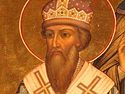 St Photius the Metropolitan of KievSaint Photius, Metropolitan of Kiev and All Russia, was by birth a Greek from the Peloponnesian city of Monembasia (Malbasia). |
 Icon of the Mother of God of TheodotievThis Icon appeared in 1483 in the vicinity of Ryazan in a desert place called "Staroe," near the village of Theodotiev. |

 Icon of the Mother of God of AkhtyrThe Akhtyr Icon of the Most Holy Theotokos appeared on July 2, 1739 in the village of Akhtyr in the area of Kharkov, east of Kiev. |

