


| Previous day | 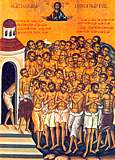
|
Next day |
| Old Style
March 9
|
Monday |
New Style
March 22
|
|
2nd Week of Great Lent.
Tone 8.
Great Lent. |
 Wine and oil allowed.
|
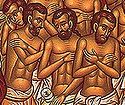
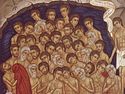
 The Holy Forty Martyrs of Sebaste: Cyrion (or Quirio), Candidus, Domnus, Hesychius, Heraclius, Smaragdus, Eunoicus, Valens, Vivianus, Claudius, Priscus, Theodulus, Eutychius, John, Xanthias, Helianus, Sisinius, Angus, Aetius, Flavius, Acacius, Ecdicius, Lysimachus, Alexander, Elias, Gorgonius, Theophilus, Dometian, Gaius, Leontius, Athanasius, Cyril, Sacerdon, Nicholas, Valerius, Philoctimon, Severian, Chudion, Aglaius, and Meliton (ca. 320).
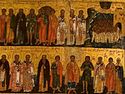
Martyr Urpasianus of Nicomedia (ca. 295). St. Caesarius, brother of St. Gregory the Theologian (ca. 369). St. Tarasius the Wonderworker, of Lycaonia. Translation to Vladimir of the relics of Martyr Abraham of the Bulgars on the Volga (1230). St. Jonah, archbishop of Novgorod (1470). St. Theodosius Levitsky, priest, of Balta (Odessa) (1845). St. Dimitra, nun and foundress of the Vvedensk Convent in Kiev (1878).
New Hieromartyrs Mitrophan Buchnoff, archpriest, of Voronezh (1931), and Ioasaph (Shakhov), abbot, of Popovka (Moscow) (1938). New Hieromartyrs Sergius Lebedev, Sergius Tsvetkov, and Alexis Smirnov, archpriests, and Dimitry Glivenko, priest, all of the Moscow region (1938).
“Albazin” Icon of the Most Holy Theotokos (“The Word Was Made Flesh”) (1666).
St. Philoromus the Confessor, of Galatia (4th c.). St. Pacianus, bishop of Barcelona (390). St. Bosa, bishop of York (705). St. Vitalis of Castronovo (994). New Martyrs (two priests and forty students) of Momisici (Montenegro) (1688).
Repose of Elder Cleopas of Ostrov-Vvedensk Monastery (1778), Schema-abbot Theodosius (Pomortsev) of Optina Monastery (1920), and Schema-archimandrite Theophilus of Kiev (1996).
Thoughts for Each Day of the Year
According to the Daily Church Readings from the Word of God
By St. Theophan the Recluse

Monday (2nd week of Lent).
Keep thy heart with all diligence; for out of it are the issues of life (Prov. 4:23).[1] Having prepared,[2] confessed and taken communion with the holy mysteries, a Christian renews within himself the grace-filled springs which were opened in him through holy Baptism, and which then so many times were obstructed by carelessness and falls, and so many times cleansed by repentance. Now these springs have been cleansed once again after the most recent falls. Let us keep them, at least from this point onward, from renewed obstruction as a result of thoughtlessness, distractedness, and negligence about those actions which maintain the springs’ purity and proper flow of waters. Let us continue fasting, not give liberty to our feelings, not cease fervent prayers and tears, not forget works of love; let seek to hear the word of God, and most of all, to converse with the Lord, Who is within us. Through this conversation we shall uphold the fear of God and zeal to please Him within ourselves, for in this lies the spring of our spiritual life.
[1]The Slavonic for Prov. 4:23 reads: Keep thy heart more than all things kept; for out of it are the springs of life.
[2]“Having prepared…” in Russian, govenie. See footnote for Tuesday of the 1st week of Great Lent.
Articles
 Martyr Urpasianus of NicomediaThe Holy Martyr Urpasianus suffered in the city of Nicomedia. |
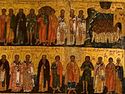 St. Caesarius, brother of St. Gregory the TheologianSaint Caesarius lived for a long time at the court of the emperor Constantius (337-361), and was his friend and chief court physician. |
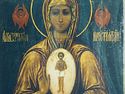 Icon of the Mother of God “The Word was made Flesh”The Albazin Icon of the Mother of God “the Word made Flesh” is of great religious significance in the Amur River region. |