| Previous day | 
|
Next day |
| Old Style
October 12
|
Saturday |
New Style
October 25
|
| 20th Week after Pentecost. Tone 2. |  No fast.
|
 Martyrs Probus, Tarachus, and Andronicus, at Tarsus in Cilicia (304). St. Cosmas the Hymnographer, bishop of Maiuma (ca. 787).
Martyr Domnina of Anazarbus (286). St. Martin the Merciful, bishop of Tours (397). Sts. Amphilochius (1452), Macarius (1480), and Tarasius (1440), abbots, and Theodosius, monk (15th c.), of Glushitsa Monastery (Vologda), disciples of St. Dionysius of Glushitsa. Uncovering of the relics of St. Macarius of Zheltovodsk and Unzha (1671). Translation from Malta to Gatchina: of a Particle of the Life Giving Cross, the Filersk Icon of the Mother of God, and the relic of the Right Hand of John the Baptist (1799). St. Arsenius, archimandrite, of Svyatogorsk Monastery (1859). St. Euphrosyne (Mezenova) the Faster, schema-abbess, of Siberia (1918). Glorification of St. Philaret, archbishop of Chernigov (2009).
New Hieromartyr Lawrence (Levchenko), hieromonk, of Optina Monastery (1937). New Hiero-confessor Nicholas (Mogilevsky), metropolitan of Alma-Ata (1955).
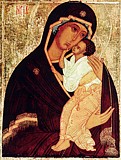
“Jerusalem” (48) and “Kaluga” (1748) Icons of the Most Holy Theotokos.
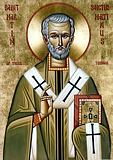
Hieromartyr Maximilian, bishop of Noricum (284). St. Mobhi of Glasnevin (Ireland) (544). Martyr Edwin, king of Northumbria (633). St. Wilfrid, bishop of York (709). Translation of the relics of St. Sabbas the Sanctified from Rome to Jerusalem (1965). Virgin-martyr Anastasia of Rome (ca. 250). St. Theodotus, bishop of Ephesus. St. Jason, bishop of Damascus. St. Symeon the New Theologian [transferred from Great Lent, March 12] (1022). St. Theosebius the God-bearer, of Arsinoe on Cyprus.
Thoughts for Each Day of the Year
According to the Daily Church Readings from the Word of God
By St. Theophan the Recluse

Saturday. [II Cor. 3:12-18; Luke 6:1-10]
The Lord’s disciples pluck the ears of grain, rub them in their hands and eat them on the Sabbath—a deed very unimportant both in appearance and in essence; meanwhile the Pharisees could not restrain themselves and rebuked them. What made them raise this issue? In appearance—unreasoning zeal, but in essence—the spirit of judgmentalness. This sticks to everything and presents all in a sombre form of unlawfulness and destructiveness. This infirmity, to a greater or lesser degree, is common to almost all people who do not watch themselves. Not everyone will express judgmental thoughts in word, but it is rare for a person to refrain from them. Someone sits beside the heart and stirs up judgmentalness—it pours forth. But at the same time the judge himself is prepared to do deeds which are not good, as long as nobody sees, and he is unfailingly in a state that is not so good in some way. It is as though he judges and condemns for that very reason—in order to satisfy his inwardly insulted and suppressed feeling of righteousness with attacks on others, groundless as they may be. He who loves righteousness and stands in it, knowing how difficult it is to attain correctness in deeds and even more so in feelings, will never judge; he is ready sooner to cover with leniency not only small, but also great transgressions of others. The Lord does not judge the judging Pharisees, but indulgently explains to them that the disciples did something that anyone would excuse if they thought about it rightly. And it almost always is this way: think reasonably about your neighbor’s actions and you will find that it does not at all have that serious, ghastly character which you saw at first.
Articles
 Martyrs Probus, Tarachus, and Andronicus, at Tarsus in CiliciaThe Martyrs Tarachus, Probus, and Andronicus suffered for Christ in the year 304 at Tarsus in Cilicia. |
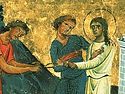 Martyr Domnina of AnazarbusThe Martyr Domnina of Anazarbus lived in the region of Cilicia, and suffered for confessing Christianity. |
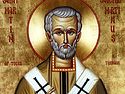
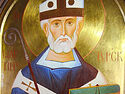
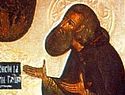 Venerable Amphilochius the Abbot of GlushetsaSaint Amphilochius, Abbot of Glushetsa, already a monk of priestly rank, came from Ustiug to Saint Dionysius of Glushetsa (July 1) in the year 1417. |
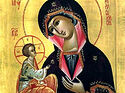 “Jerusalem” Icon of the Mother of GodThe Jerusalem Icon of the Mother of God, by tradition, was painted by the holy Evangelist Luke fifteen years after the Ascension of the Lord at Gethsemane. |