ORTHODOX CHRISTIANITY Orthodox Calendar
Orthodox Calendar 2025
Previous day
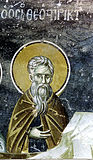
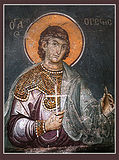
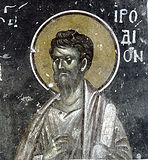
Преподобный Феостирикт Медикийский Мч. Орест Тианский Апостол от 70-ти Родион
Next day
Old Style
November 10
Sunday
New Style
November 23
24th Sunday after Pentecost. Tone 7.
No fast.

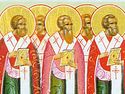
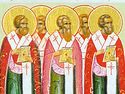
Cовершается служба, не отмеченная в Типиконе никаким знакомApostles of the Seventy Erastus, Olympas, Herodion, Sosipater, Quartus, and Tertius (Terence) (1st c.).

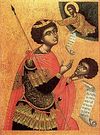
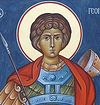
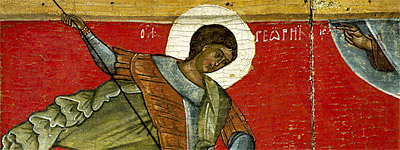
Commemoration of the beginning of the torture of Great-martyr George (303). Martyr Orestes the Physician, of Cappadocia (304). Hieromartyr Milos (Miles), bishop in Persia, and his disciples, Martyrs Aborsam and Senoe (ca. 341). Great-martyr Constantine-Kakhi, prince of Kartli, Georgia (852). St. Theocteristus, abbot, of Symbola Monastery on Mt. Olympus in Bithynia. Glorification of St. Matthew, monk, of Yaransk (1997).

New Hieromartyrs Procopius (Titov), archbishop of Kherson, Seraphim (Gushchin), hieromonk of Optina Monastery, and Peter Pavlushkov, archpriest, of Tula (1937). New Hieromartyrs Augustine (Belyaev), archbishop of Kaluga, and with him Ioannicius (Dmitriev), archimandrite, of the St. George Monastery (Meshchevsk), Niphon (Vyblov), hieromonk, of Berezovy Khutor (Saratov), and John Speransky, archpriest, of Kaluga (1937). New Martyrs Alexis Gorbachev, Apollonius Babichev. and Michael Arefeyev, Nicholas Smirnov, Anna Ostroglazova (1937-1939). New Martyrs Olga Maslennikova (1941) and Theoctista Chentsova (1942).

St. Eucharius, first bishop of Trier (3rd c.). St. Nonnus, bishop of Heliopolis (471). St. Justus, archbishop of Canterbury (627- 631). Ten Martyrs of Gaza, at Jerusalem: Callinius, Imerius, Diasimus, Theodore, Stephen, Peter, Paul, Theodore, John, and John (638). Translation of the relics of St. Gregory, bishop of Assos near Ephesus (1150).

Thoughts for Each Day of the Year
According to the Daily Church Readings from the Word of God
By St. Theophan the Recluse

St. Theophan the Recluse

Twenty Fifth Sunday After Pentecost. [Eph. 4:1-6; Luke 10:25-37]

   To the man who asked how to be saved, the Lord on his part offered a question: What is written in the law? how readest thou? By this He showed that to resolve all perplexity one must turn to the word of God. And so that there will not be such perplexity at all it is best to always read Divine Scripture attentively, with discernment and sympathy, applying it to your own life, and fulfilling in your own thoughts what relates to thoughts, in your own feelings and dispositions what relates to the senses, and in your deeds what relates to deeds. One who hearkens to the word of God gathers bright understanding of all that is in him, what is near to him, and what is above him; he clarifies his obligations in all aspects of life, and holy rules, like valuable pearls, are strung onto the thread of his conscience, which then precisely and definitely indicate how and when to act so that he please the Lord. He tames the passions—something reading the word of God always acts to assuage. No matter what passion troubles you, begin to read the word of God and the passion will become quieter and quieter, and at last it will be entirely calmed. He who enriches himself through knowledge of the word of God is overshadowed by the pillar of cloud which guided the Israelites in the desert.

Articles

Apostle Erastus of the Seventy

The holy Apostles Erastus, Sosipater, Quartus and Tertius were disciples of Saint Paul.

Apostle Olympas of the Seventy

Saint Olympas was mentioned by the holy Apostle Paul (Rom 16:15).

Apostle Rodion of the Seventy

Saint Rodion, or Herodion (April 8), was a kinsman of the Apostle Paul (Romans 16:11), and left the bishop’s throne at Patras to go to Rome with the Apostle Peter.

Apostle Herodion of the Seventy, and those with Him

Saints Herodion (Rodion), Agabus, Asyncritus, Rufus, Phlegon and Hermes are among the Seventy Apostles, chosen by Christ and sent out by Him to preach.

Apostles Jason and Sosipater, of the Seventy, and their companions: Martyrs Saturninus, Jakischolus (Inischolus), Faustianus, Januarius, Marsalius, Euphrasius, Mammius, the virgin Cercyra, and Christodulus the Ethiopian, at Corfu

The Apostle Jason was from Tarsus (Asia Minor). He was the first Christian in the city. The Apostle Sosipater was a native of Patra, Achaia.

Apostle Sosipater of the Seventy

Saint Sosipater, a native of Achaia, was Bishop of Iconium, where also he died. Saint Paul mentions him in Romans 16:21.

Apostle Quartus of the Seventy

Saint Quartus endured much suffering for his piety and converted many pagans to Christ, dying peacefully as a bishop in the city of Beirut.

Apostle Tertius of the Seventy

Saint Tertius, to whom Saint Paul dictated the Epistle to the Romans, was the second Bishop of Iconium, where also he died.

The Holy and Great Martyr George

Once, when he heard in a court the inhuman sentence concerning the annihilation of Christians, St. George became inflamed with compassion for them. Foreseeing that sufferings were also awaiting him, George distributed his property to the poor, freed his slaves, appeared before Diocletian and, having revealed himself as a Christian, denounced him for cruelty and injustice. George's speech was full of powerful and convincing objections against the imperial order to persecute Christians.

The Real St. George

Archpriest Andrew Phillips

Regularly, the secular media report stories about England's current patron-saint. There are those who complain that St George is 'a Turkish saint'; others project the image of a knight in medieval armour; yet others claim him as 'the patron of the English football team'. Where does such nonsense come from and who is the real St George?

Great Martyr George

Greatmartyr, Victory-bearer and Wonderworker George

The Holy Great Martyr George the Victory-Bearer, was a native of Cappadocia (a district in Asia Minor), and he grew up in a deeply believing Christian family.

Martyr Orestes of Cappadocia

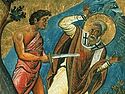
The Martyr Orestes the Physician of Cappadocia lived at the end of the third century in the city of Tyana in Cappadocia in the time of the emperor Diocletian (284-311).

Hieromartyr Milus the Bishop in Persia

The Hieromartyr Milus, Bishop of Babylon, and his disciples Euores the Presbyter and Seboes the Deacon, lived during the fourth century.

Martyr Constantine the King of Georgia

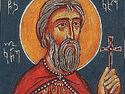
The 9th century was one of the most difficult periods in Georgian history. The Arab Muslims wreaked havoc throughout the region of Kartli, forcibly converting many to Islam with fire and the sword. Many of the destitute and frightened were tempted to betray the Faith of their fathers.

Venerable Theocteristus, Abbot of Symbola on Mount Olympus, Bithynia

Saint Theosteriktos was the Igoumen of Symbola Monastery on Mount Olympus in Bithynia. He lived during the reign of Constantine V Copronymos (741-755), who persecuted the Orthodox because they venerated icons.
© ORTHODOX CHRISTIANITY