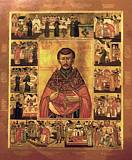
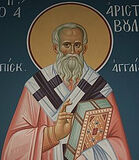
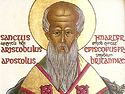
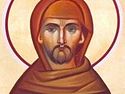
Apostles of the Seventy Stachys, Amplias, Urban, Narcissus, Apelles, and Aristobulus (1st c.). Martyr Epimachus of Pelusium, at Alexandria (ca. 250).
St. Maura of Constantinople (436). Sts. Spyridon and Nicodemus the Prosphorabakers, of the Kiev Caves (12th c.). St. Anatolius, recluse of the Near Caves in Kiev (12th c.). 100,000 Martyrs of Tbilisi slain under Jalal al-Din (1227).
New Hieromartyr John Kochurov, archpriest, of Chicago and St. Petersburg (1917). New Hieromartyr Leonid (Molchanov), abbot, of the Sovlvychegodsk Monastery (Vologda) (1918). New Hieromartyrs Alexander Vozdvizhensky, archpriest, of Novo-Zagarye (Moscow), Peter Voskoboinikov, archpriest, of Batkopolye (Moscow), and Vsevolod Smirnov, archpriest, of Dermentsovo (Moscow) (1937). New Hieromartyrs Euphrosynus (Antonov), hieromonk of the Seven Lakes Monastery (Kazan), Anatole (Botvinnikov), hieromonk, of Dubrovskoye (Tver), and Innocent (Mazurin), hierodeacon, of Buigorod (Volokolamsk) (1938).
Martyr Quentin of Rome (3rd-4th c.). Martyrs Epimachus the Roman and his companion Gordian (361-363). St. James, bishop of Mygdonia (4th c.). Monk-martyr Foillan, Irish missionary, of Burgh Castle (East Anglia) and Fosse (Gaul) (655). New Martyr Nicholas of Chios (1754). St. Peter Kalnyshevsky, Cossack ataman (Ukraine) (1803).
Thursday. [I Thess. 5:1-8; Luke 11:47-12:1]
Beware ye of the leaven of the
Pharisees, which is hypocrisy. The distinguishing
feature of hypocrisy is to do everything for show. To do
things where others can see is not yet hypocrisy because a
large portion of our required deeds must be done for
people, and consequently amidst them and in their view.
And although those who manage to do everything secretly do
better, it is not always possible; this is why one cannot
immediately blame those who act in sight of others with
desire for ostentation or show. They might have a sincere
desire to do good, while showing others is a necessary
accompaniment for deeds done outwardly. Hypocrisy begins
the moment there appears the intention not to do good, but
only to show yourself as doing good. And this again is not
always an offence, because there can be a momentary attack
of evil thoughts which are immediately noticed and chased
away. But when one has it in mind to make a reputation for
himself as a benefactor, there is already hypocrisy, which
enters deeply into the heart. When a hidden goal of taking
advantage of the benefits of such a reputation is added to
this, then hypocrisy is in full vigour. Everyone, look at
what the Lord requires when He commands to beware of
the leaven of the Pharisees. Do good according to a
desire to do good to others, according to the
consciousness that God’s will is for this, unto the
glory of God. But do not worry about people looking at
it—and you will avoid hypocrisy.