


| Previous day | 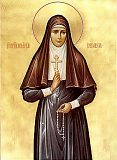
|
Next day |
| Old Style
September 28
|
Saturday |
New Style
October 11
|
| 18th Week after Pentecost. Tone 8. |  No fast.
|
 St. Chariton the Confessor, abbot, of Palestine (350).
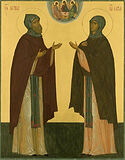
  Sts. Cyril, schemamonk, and Maria, schemanun, parents of St. Sergius of Radonezh (ca. 1337).
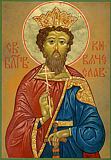
Prophet Baruch (6th c. b.c.). Martyrs Alexander, Alphius, Zosimas, Mark the Shepherd, Nicon, Neon, Heliodorus, and 24 others, in Pisidia and Phrygia (4th c.). Martyr Wenceslaus (Vyacheslav), prince of the Czechs (935). St. Chariton, abbot of Syandema Monastery (Vologda) (1509). St. Herodion, founder of Iloezersk Monastery (Belozersk) (1541). Synaxis of the Holy Fathers of Kiev whose relics lie in the Near Caves of St. Anthony.
New Hieromartyr Hilarion (Gromov), hieromonk, of Petushki (Vladimir), and New Martyr Michaela (Ivanova), schemanun, of Aksinyino (Moscow) (1937).
St. Faustus, bishop of Riez (495). St. Alkison, bishop of Nicopolis (Preveza) in Epirus (561). Hieromartyr Annemund, archbishop of Lyons (658). St. Leoba, abbess of Tauberbischofsheim, English missionary to Germany (779). St. Auxentius the Alaman, wonderworker, of Cyprus (12th c.). Martyr Eustace of Rome. Translation of the relics of St. Neophytus the Recluse, of Cyprus (1214).
Thoughts for Each Day of the Year
According to the Daily Church Readings from the Word of God
By St. Theophan the Recluse

Monday. [Gal. 2:11-16; Mark 5:24-34]
The woman with the issue of blood had only to touch the Lord with faith, and power went out of the Lord into her: straightway the fountain of her blood was dried up. The issue of blood is an image of passionate thoughts and intentions, incessantly springing forth from the heart, if it has not yet been cleansed from all sympathy to sin—this is our sinful disease. It is sensed by those who have repented and zealously strive to keep themselves pure not only outwardly, but inwardly as well. Such people see that evil thoughts incessantly proceed from the heart, and they grieve over this and seek healing. But it is not possible to find such healing in oneself or others; it comes from the Lord, or more precisely, it comes when the soul touches the Lord and power goes out of the Lord into the soul. In other words, it comes when tangible contact with the Lord occurs, to which a particular warmth and inner burning testifies. When it happens, I say, immediately the soul feels that it “was healed of that plague.” This is a great good; but how can it be attained? The woman with the issue of blood pressed towards the Lord and received healing—we too must press towards the Lord, going without laziness by the narrow way of inner and outer spiritual endeavours. Everything is narrow and pressing for those who go by this way, and the Lord is not in sight. But then suddenly there is the Lord. And joy! The Kingdom of God does not come noticeably…
Saturday. [I Cor. 15:58-16:3; Luke 5:17-26]
But that ye may know that the Son of man hath power on earth to forgive sins, He said to the paralytic, I say unto thee, Arise, and take up they couch, and go into thine house. Remission of sins is an inner, spiritual miracle; healing from paralysis is an outer miracle—the natural acting of God in the world, a physical miracle. The flowing in of God’s power is justified and confirmed by this event in the moral realm, and in the movement of phenomena in the physical world. The latter is in view of the former, for in the former lies the goal of everything. The Lord does not coerce one’s freedom, but gives understanding, inspires, and amazes. One of the best means for this is an outer miracle. This came to be when man became a rational creature, ruled by freedom. This connection is so essential, that those who reject the supernatural action of God in the world also reject the freedom of man, along with the recognition that the latter must necessarily call forth the former. On the other hand, those who confess the truth of God’s influence in the world beyond a natural flow of events can say boldly: we can feel that we are free. The recognition of freedom is as strong and irresistible as the recognition of one’s existence. Freedom urgently demands direct providential actions of God: consequently the acknowledgement of these actions stands as firmly as the recognition of freedom.
Articles
 Venerable Chariton of Syanzhemsk, VologdaSaint Euthymius and his disciple St Chariton lived at the River Syanzhema during the close of the fifteenth and the beginning of the sixteenth centuries. |