ORTHODOX CHRISTIANITY Orthodox Calendar
Orthodox Calendar 2026
Previous day
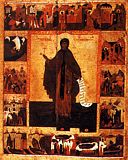
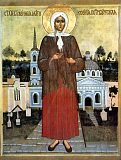
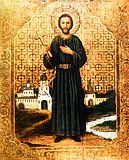
Преподобная Ксения с житием Блаженная Ксения Петербургская Мч. Иоанн Казанский
Next day
Old Style
January 24
Friday
New Style
February 6
Fast-free Week. Tone 1.
No fast.

Cовершается служба, не отмеченная в Типиконе никаким знакомSt. Xenia of Rome and her two female slaves (ca. 457). Совершается служба с полиелеемSt. Xenia of St. Petersburg, fool-for-Christ (19th c.).

Martyrs Babylas of Sicily and his two disciples Timothy and Agapius (3rd c.). St. Macedonius, hermit of Mt. Silpius, near Antioch (ca. 420). Translation of the relics of Monk-martyr Anastasius the Persian (7th c.). St. Gerasim, bishop of Perm (ca. 1449). Martyr John of Kazan (1529). St. Dionysius of Olympus and Mt. Athos (1541). St. Sophia, first abbess of Shamordino Convent (1888). Blessed Valentina (Sulkovskaya) of Minsk (1966).

Martyrs Paul, Pausirius, and Theodotian, of Egypt (3rd c.). St. Felician, bishop of Foligno in Italy (254). St. Philo, bishop of Carpasia on Cyprus (5th c.). St. Lupicinus of Lipidiaco (Gaul) (500). St. Cadoc, abbot, of Llancarfan (ca. 580). St. Zosimas of Cilicia, bishop of Babylon in Egypt (6th c.). St. Neophytus the Recluse, of Cyprus (1214).

Repose of Bishop Nektary (Kontzevitch) of Seattle (1983).

Thoughts for Each Day of the Year
According to the Daily Church Readings from the Word of God
By St. Theophan the Recluse

St. Theophan the Recluse

Friday. [I John 2:7–17; Mark 14:3–9]

The world passeth away, and the lust thereof (I John 2:17). Who does not see this? Everything around us passes away—things, people, events; and we ourselves are passing away. Worldly lust also passes; we scarcely taste the sweetness of its satisfaction before both the lust and the sweetness disappear. We chase after something else, and it is the same; we chase after a third thing—again the same. Nothing stands still; everything comes and goes. What? Is there really nothing constant?! There is, says the Apostle: he that doeth the will of God abideth for ever (I John 2:17). How does the world, which is so transient, endure? Because God so desires that the world endure. The will of God is the world’s unshakeable and indestructible foundation. It is the same among people—whosoever begins to stand firmly in the will of God is made steadfast and firm at once. One’s thoughts are restless when chasing after something transient. But as soon as one comes to his senses and returns to the path of the will of God, his thoughts and intentions begin to settle down. When at last one succeeds in acquiring the habit for such a way of life, everything he has, both within and without, comes into quiet harmony and serene order. Having begun here, this deep peace and imperturbable serenity will pass over to the other life as well, and there it will abide unto the ages. Amidst the general transience of things around us, this is what is not transient, and what is constant within us: walking in the will of God.

Articles

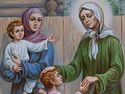
Venerable Xenia of Rome, and her two female servants

Saint Xenia of Rome, in the world Eusebia, was the only daughter of an eminent Roman senator. From her youth she loved God, and wished to avoid the marriage arranged for her.

The Life of St. Xenia of Petersburg

Having come to know the inconstancy of earthly happiness through the death of her beloved husband, Xenia strove toward God with all her heart, and sought protection and comfort only in Him. Earthly, transitory goods ceased to have any value for her.

"You Know Where to Go!" St. Xenia of Petersburg comes to Oakland

Nun Cornelia (Rees)

Our biker rode off on his Harley Davidson, and soon had a terrible accident, which cost him his legs. Eventually he landed back in the company of his old “friends”, in a run-down apartment in a low-rent neighborhood in the bad part of a crime-ridden city.

St. Xenia’s Faithfulness to God

Roman Savchuk

In the image of St. Xenia everyone can find something familiar and close. It seems that there are no barriers between the saint and the soul of any person—no misunderstandings, or difference of opinions. Just say a word, awaken a feeling in the heart, and you will immediately be heard, understood, consoled…

A Miracle of St. Xenia the Fool-for-Christ in France

“I came to tell you,” she said to him, as she lifted her cane, “to stop ridiculing Yuri, who is praying, because you will remain here a long time yet, and will seek his prayers....”

How to Become a Holy Fool: Homily on Saint Xenia of St. Petersburg, Fool for Christ

Fr. Philip LeMasters

"Christ surely does not call us all to the rare ministry of a Fool for Christ like St. Xenia, but we may all learn from her example that the humility of embracing our constant need for mercy is at the heart of faithfulness to a Lord Whose Kingdom is not of this world. There must be something of the holy fool in us all, if our eyes are to be opened to a truth that the world does not yet see."

St. Xenia of Petersburg

St. Xenia of Petersburg

St. Xenia Fool-for-Christ

People preoccupied with worldly matters would naturally assume that anyone who gave away his wealth must be insane. They were incapable of seeing that Xenia had undergone a complete rebirth; she was changed from a worldly woman into a spiritual being.

Martyrs Babylas of Sicily and his two disciples Timothy and Agapius

The Holy Martyrs Babylas of Sicily and his two disciples Timothy and Agapius lived during the third century on the outskirts of Rome.

St. Macedonius the Hermit of Syria

Saint Macedonius, a Syrian hermit, lived during the end of the fourth century and the beginning of the fifth.

Monkmartyr Anastasius the Persian

The Monk Martyr Anastasius the Persian was the son of a Persian sorcerer named Bavi. As a pagan, he had the name Magundates and served in the armies of the Persian emperor Chozroes II, who in 614 ravaged the city of Jerusalem and carried away the Life-Creating Cross of the Lord to Persia.

St. Gerasimus the Bishop of Perm

Saint Gerasimus, Bishop of Great Perm and Ust’Vymsk, was the third bishop of the newly-enlightened Zyryani people, and he was a worthy successor to Saint Stephen, the Enlightener of Perm.

Martyr John of Kazan

During the reign of Great Prince Basil the Tatars swooped down upon Nizhni Novgorod. Many of the inhabitants were taken into captivity and brought to Kazan. Also among their number was the fearless John.

Venerable Dionysius of Olympus

Fond of prayer and reading spiritual books from his youth, Saint Dionysius decided to become a monk after the death of his parents. With this aim he went to Meteora, and then to Mount Athos.

Martyrs Paul, Pausirius, and Theodotian, of Egypt

The Holy Martyrs Paul, Pausirius, and Theodotion lived in Egypt during the third century.

St. Philon, Bishop of Kolpasteia, Crete

Saint Philon, Bishop of Kolpasteia (Crete) He died peacefully in the fifth century.

Venerable Cadoc, Abbot of Llancarfan in Wales

Dmitry Lapa

St. Cadoc (c. 497 - c. 580) was the founder of the famous monastery of Llancarfan (c. 518) in the present-day Vale of Glamorgan in Wales. This monastery was to become one of the best-known in Wales, as well as a great centre of learning.
© ORTHODOX CHRISTIANITY