| Previous day | 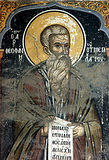
|
Next day |
| Old Style
March 12
|
Wednesday |
New Style
March 25
|
|
5th Week of Great Lent.
Tone 8.
Great Lent. |
 Wine and oil allowed.
|
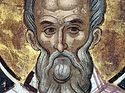
 St. Theophanes the Confessor, of Sigriane (818).
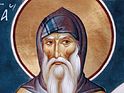
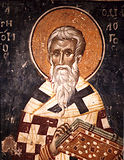
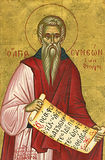
Righteous Phineas, grandson of Aaron (ca. 1500 b.c.). St. Gregory the Dialogist, pope of Rome (604). Sts. Symeon the New Theologian (1021), and his elder, Symeon the Reverent, of the Studion (987).
New Hieromartyr Vladimir (Volkov), archimandrite, of Islavskoe (Moscow) (1938).
Icon of the Most Holy Theotokos “Not-Made-by-Hands” (on the Pillar) at Lydda (1st c.).
Righteous Aaron the High Priest, brother of Prophet Moses the God-seer (ca. 1530 b.c.). St. Cyrus, monk, of Alexandria (6th c.). St. Paul Aurelian, bishop of Leon in Brittany (572). St. Alphege, bishop of Winchester, England (951). St. Nicodemus of Mammola in Calabria (990). Martyr Demetrius the Devoted, king of Georgia (1289). St. Dragutin (monk Theoctistus) of Serbia (1316). St. Cyril, abbot of St. Athanasius Monastery (North Macedonia) (1845).
Repose of Schemamonk Anthony the Gorge-dweller, of Zelenchug Monastery in Kuban (1908).
Thoughts for Each Day of the Year
According to the Daily Church Readings from the Word of God
By St. Theophan the Recluse

Wednesday.
The way of life is above to the wise, that he may depart from hell beneath (Prov. 15:24). It is well-known to all that hell exists, and that anyone can end up there as a result of his deeds. But not all remember this, or live so piously that they are clearly trying to to avoid hell. They live without thinking about it, saying, “Maybe… Maybe we somehow will not end up in hell.” Where is our reason? In earthly affairs one can somehow get away with “maybe,” but in such a decisive affair, which, once accomplished, will abide unto the ages of ages unchanged, “maybe” reveals lack of reason to the utmost degree. Do not pride yourself, O Reason, on your reasonableness, when you do not remember this and do not suggest to us thoughts of life: how to avoid hell in order to be saved.
Articles