


| Previous day | 
|
Next day |
| Old Style
April 20
|
Sunday |
New Style
May 3
|
| 4th Sunday of Pascha. Sunday of the Paralytic. Tone 3. |  No fast.
|
 St. Theodore Trichinas ('the Hair-shirt Wearer'), hermit, near Constantinople (400).
Righteous Tabitha of Joppa (1st c.). Blessed Gregory (593) and Anastasius I, patriarchs of Antioch (599). St. Anastasius, abbot, of the monastery of St. Catherine at Sinai (695). Second translation of the relics (1711) of Martyr Abraham of the Bulgars on the Volga (1230). St. Alexander, founder of Oshevensk Monastery (Arkhangelsk) (1479). Child-martyr Gabriel of Slutsk (Poland) (1690). Translation of the relics (1991) of St. Nikolai (Velimirovich), bishop of Ochrid and Zhicha (1956) from America to Serbia.
New Hiero-confessor Theodosius (Ganitsky), bishop of Kolomna (1937).
Apostle Zacchaeus of the Seventy, bishop of Caesarea in Palestine (1st c.). Sts. Bretanion (Vetranion) (ca. 378), and Theotimus (ca. 412), bishops of Tomis in Moesia. St. Caedwalla, king of the West Saxons (689). Hieromartyr Anastasius II, patriarch of Antioch (609). Sts. Athanasius (1380) and Ioasaph (1423) of Meteora, abbots. New Martyr Theodore of Byzantium, who died at Mytilene (1795). All Saints of Euboea. Synaxis of the Saints of Carpatho-Russia.
Repose of Schemamonk Ignatius of St. Nicephorus Monastery in Olonets (1852).
Thoughts for Each Day of the Year
According to the Daily Church Readings from the Word of God
By St. Theophan the Recluse

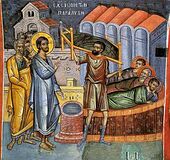
Sunday of the Paralytic. [Acts 9:32–42; John 5:1–15]
Behold, thou art made whole: sin no more, lest a worse thing come unto thee (John 5:14). Sin does not strike only the soul, but the body as well. In some cases this is exceedingly obvious; in others, although not so clearly, the truth remains that the illnesses of the body always stem from sins. A sin is committed in the soul and directly makes it sick; but since the life of the body comes from the soul, then the life coming from a sick soul is of course not healthy. The mere fact that sin brings darkness and sorrow must unfavourably act on the blood, in which lies the basis of bodily health. But when you remember that it separates man from God, the Source of life, and places man in disharmony with all laws acting in himself and in nature, then one must marvel how a sinner remains alive after sinning. This is the mercy of God, Who awaits repentance and conversion. Consequently, a sick person must rush first of all to be cleansed of sins and make peace with God in his conscience. This paves the way for the beneficial action of medicine. They say that there was one distinguished doctor who would not begin treatment until the patient had confessed and received the holy Mysteries; and the more serious the disease, the more urgently he insisted upon this.
Articles

 Venerable Anastasius the Abbot of SinaiSaint Anastasius of Sinai lived in the seventh century, and was one of the great ascetics who flourished on Mt. Sinai. |

 Childmartyr Gabriel of BialystokChild Martyr Gabriel of Bialystok was killed in Poland when he was only six years old. |
 The Happiness of the World Is Built Within the Human SoulSvetlana RybakovaAs we read St. Nikolai’s writings, it becomes clear that God Jesus Christ is love and the true meaning of human existence. |
 Apostle ZacchaeusThe holy Apostle Zacchaeus was a rich publican at Jericho. |
 St. Theotimus the Bishop of Lesser ScythiaSaint Theotimus the Scythian was Bishop of Tomis in Scythia. He was a native of Dacia Pontica, and was part Roman. |
 Sunday of the Paralytic |