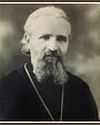
Metropolitan Hilarion (Kapral), Svetlana Vysotskaya, Alexander Frolov
Thank God, our unity was established long ago. One can say that it happened even before the signing of the Act. The Russian people who live abroad mostly awaited unification, and prayed for it. And it was finally manifested in the form of the canonical act, because there remained no other obstacles—neither dogmatic nor historic—connected with the tragic events in the history of our country. I can state with confidence that our unity is secure.
Rating: 10|Votes: 4
"The argument that each nation, only because it is different from another nation, should have an autocephalous Church is unsupported. At the same time, the argument is unsupported which says that a mature local Church cannot be self-governed only because it does not have a different nationality from one that already has autocephaly. National affiliation cannot and must not be the only criterion for independence. The Church measures according to the criterion of maturity in love and service, and according to pastoral needs, and not according to those who ask for autocephaly on the basis of the separateness of the nation and the state."
We thank the Lord that, this far from our Homeland, He yet gives us strength to reject any “foreign gods,” to preserve our recognition and vibrant understanding that without standing firm in the Orthodox Church, the Russian person is nothing, and his life becomes a toy in the hands of the “ancient slayer of man,” or, at best, he becomes empty, and, wandering off into political or social activity, becomes as a “tinkling cymbal,” that is, he becomes nothing but noise.
Rating: 1.5|Votes: 579
As the Russian Orthodox Church celebrates the “Days of Slavic Culture”, which yearly begins on the feast of Sts. Cyril and Methodius (May 11/24), Pravoslavie.ru/OrthoChristian.com would like to note a useful website created as an aide to anyone interested in learning more about the Church Slavonic language. This language has liturgically united Russian, Ukrainian, Serbian, Bulgarian, and other Slavic Orthodox peoples for many centuries. Many modern converts to Orthodoxy also attend churches that use this liturgical language.
Michael Austin
Rating: 10|Votes: 1
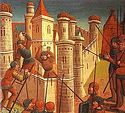
The Byzantine Empire’s long run — 1,100 years — may seem remote from the 21st century, but a reading of its history offers at least three timeless lessons.