


| Previous day | 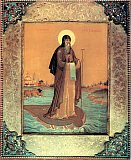
|
Next day |
| Old Style
July 3
|
Thursday |
New Style
July 16
|
| 7th Week after Pentecost. Tone 5. |  No fast.
|
 Martyr Hyacinth of Caesarea in Cappadocia (108).
  Second translation of the relics of Hieromartyr Philip, metropolitan of Moscow and all Russia (1652).
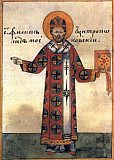
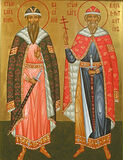
Martyrs Diomedes, Eulampius, Asclepiodotus, and Golinduc (2nd c.). Martyrs Mocius and Mark (4th c.). St. Alexander, founder of the Monastery of the Unsleeping Ones, Constantinople (ca. 430). St. Anatolius, patriarch of Constantinople (458). St. Anatolius, recluse, of the Near Caves in Kiev (12th c.) and St. Anatolius (another), recluse, of the Far Caves in Kiev (13th c.). Repose of St. Basil, bishop of Ryazan (1295). Sts. Basil and Constantine, princes of Yaroslavl (13th c.). Sts. John and Longinus of Yarenga, monks of Solovki (1561). Blessed John of Moscow, fool-for-Christ (1589). St. Nicodemus of Khozyuga, monk of Kozhaezersk Monastery (1640). St. Basil, archbishop of Novgorod (1352). Blessed Michael, Herodion, Basil, and Thomas, fools-for-Christ, of Solvychegodsk (17th c.).
New Hieromartyr Anthony (Bystrov), archbishop of Arkhangelsk and Kholmogorsk (1931).
“Milk-Giver” Icon of the Most Holy Theotokos of Hilandar, Mt. Athos.
St. Anatolius, bishop of Laodicea, and his successor, St. Eusebius (3rd c.). St. Germanus, bishop of the Isle of Man and enlightener of Peel, nephew of St. Patrick of Ireland (474). St. Isaiah the Solitary, of Scetis and Palestine (ca. 489). St. Symeon the Stylite (the third), of Cilicia (6th c.). St. George the Godbearer, of the Black Mountain, teacher of St. George of Mt. Athos (1068). St. Joachim, monk, of Notena in Achaia (17th c.). New Monk-martyr Gerasimus the New, of Carpenision, at Constantinople (1812). Martyrs Theodotus and Theodota, martyred with St. Hyacinth at Caesarea in Cappadocia (108).
Repose of Nun Euphrosyne “the Unknown,” of Kolyupanovo (Aleksin) (1855).
Thoughts for Each Day of the Year
According to the Daily Church Readings from the Word of God
By St. Theophan the Recluse

Thursday. [I Cor. 7:24-35; Matt. 15:12-21]
Out of the heart proceed evil thoughts. From whence in the heart? Their root lies in sin which lives within us, and their branching out, multiplying and particular appearance in each person come from that person’s own will. What should one do? First, cut off all that comes from your will. This will be like someone tearing off leaves from a tree, cutting off branches and twigs, and chopping the trunk almost to its roots. Then, do not allow new sprouts to come up, and the root itself will dry up; that is, do not allow evil thoughts to proceed from your heart, and repel and drive off those that do, and the sin which lives in us, not receiving sustenance, will slacken and completely grow weak. In this lies the essence of the commandment: be sober, be vigilant (1 Peter 5:8). Take heed unto thyself (1 Tim. 4:6). Gird up the loins of thy mind 1 Peter 1:13.” Together with attentiveness one must have discernment. From the heart not only bad things proceed, but also good things; yet, one should not fulfil every good thing suggested by the heart. What one should truly fulfil is determined by discernment. Discernment is a gardener’s knife; some branches it cuts off, while others it grafts in.
Articles


 Martyr MociusThe Holy Martyrs Mocius and Mark were arrested as Christians and brought to trial by the governor Maximian. |
 Martyr MarkThe Holy Martyrs Mocius and Mark were arrested as Christians and brought to trial by the governor Maximian. |


 St Basil the Bishop of Ryazan |
 Right-believing Prince Basil of Yaroslavl |
 Right-believing Prince Constantine of YaroslavlIn their youth they lost their father, Vsevolod, who fell in battle with the Tatars (Mongols). St Basil, the elder brother, succeeded to the throne. |


 Venerable Nicodemus the Abbot of Kozhe Lake |


 St George the God-BearerSaint George the God-bearer and Recluse labored in the Black Mountains near Antioch during a time when the churches and monasteries there flourished. |