


| Previous day | 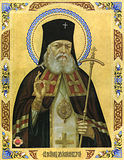
|
Next day |
| Old Style
March 5
|
Wednesday |
New Style
March 18
|
|
4th Week of Great Lent.
Tone 7.
Great Lent. |
 Monastic rule: xerophagy (bread, uncooked fruits and vegetables).
|
 Martyr Conon of Isauria (1st c.). Translation of the relics of St. Theodore, prince of Smolensk and Yaroslavl, and his children Sts. David and Constantine (1463).
Martyr Onisius of Isauria (1st c.). Martyr Conon the Gardener, of Pamphylia (3rd c.). St. Mark the Faster, of Egypt (5th c.). St. Hesychius the Faster, of Bithynia (ca. 790). Monk-martyr Adrian (1550), founder of Poshekhonye Monastery (Rostov), and his fellow-ascetic St. Leonid (1549). Virgin-martyr Irais (Rhais) of Antinoe in Egypt. Martyr Eulogius of Palestine. Martyr Eulampius of Palestine. Sts. Basil (1249) and Constantine (1257), princes of Yaroslavl.
New Hieromartyrs Theophan (Grafov), hierodeacon of Borisoglebsk Monastery (Vladimir) and Mardarius (Isaev), hieromonk, of Yurievskoe (Yaroslavl) (1938).
St. Theophilus, bishop of Caesarea in Palestine (200). Martyr Archelaus and 152 Martyrs in Egypt (ca. 308). St. Kieran (Ciaran) of Saighir, Munster (5th c.-6th c.). St. Virgil, archbishop of Arles (618). New Martyr John the Bulgarian, at Constantinople (1784). New Hieromartyr Parthenius, bishop of Didymoteichon in Thrace (1805). New Martyr George of Rapsana, at Larissa (1818). St. Nikolai (Velimirovich), bishop of Ochrid and Zhicha, Serbia (1956).
Repose of Metropolitan Cornelius of Novgorod (1698).
Thoughts for Each Day of the Year
According to the Daily Church Readings from the Word of God
By St. Theophan the Recluse

Wednesday.
Baptism (kreshenie) in the Russian language sounds like cross (krest). This is fortunate consonance, for although the visible action of baptism is submersion, its essence is a co-crucifixion with Christ on the inner, spiritual cross. The Apostle Paul says: our old man is crucified with him in baptism (Rom. 6:6). This is not some sort of mechanical act, but a moral change, or a revolution of thoughts, goals, desires, and sympathies. Before, all of these were stained with self-pleasure; now all are selflessly dedicated to God, in Christ Jesus, by the grace of the Holy Spirit. [If you were baptized as an infant] you will say, “I didn’t understand that when I was baptized.” Now you understand; set it in your conscience to carry out the meaning of baptism, for your baptism is indelible. Even at the judgement its seal will be visible either for you, or against you.
Articles


 Martyr Onesimus of IsauriaThe Holy Martyr Onesimus (Onisius) lived in Palestine. |
 Martyr Conon the Gardener of PamphyliaThe saint suffered for his faith in Christ under the emperor Decius (249-251). |
 St. Mark the Ascetic of EgyptFrom his youth his fondest pursuit was the reading of Holy Scripture. It is said that he knew the whole Bible by heart. |
 St. Hesychius the Faster of BithyniaSaint Hesychius the Faster was born in the eighth century in the coastal city of Adrineia in Bithynia. |

 Martyr Eulogius of PalestineThe Holy Martyr Eulogius was a native of Palestine. |
 Martyr Eulampius of PalestineThe Holy Martyr Eulampius lived in Palestine. He was beheaded for his faith in Christ. |


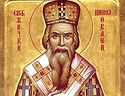
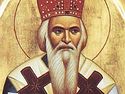
 The Happiness of the World Is Built Within the Human SoulSvetlana RybakovaAs we read St. Nikolai’s writings, it becomes clear that God Jesus Christ is love and the true meaning of human existence. |