Corfu, Greece, June 20, 2025
 Photo: enimerosi.com
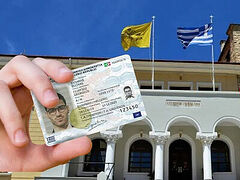
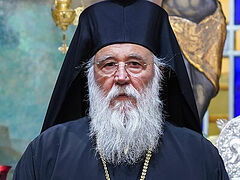
The ongoing controversy over Greece’s new Personal ID Number (PAI) has intensified within the Greek Orthodox Church, as His Eminence Metropolitan Nektarios of Corfu issued a strong critique of the Holy Synod’s recent decision to approve the digital identification system.
On June 13, the Permanent Holy Synod of the Church of Greece released a statement supporting the Personal ID Number, which is designed to gradually replace existing identification numbers including the ID card number, tax registration number (AFM), and social security number (AMKA). The Synod’s statement outlined two key points:
(a) in transactions between people and the Public Sector, identification will not be made exclusively based on the “personal number,” but personal civil registry data (name, surname, birth details, etc.) will continue to be requested,
(b) the personal number replaces existing numbers (ID, AFM, AMKA) that natural persons already possess. Therefore, regarding the “personal number,” neither a theological reservation nor a claim of unconstitutional restriction of individual freedoms (e.g. personal data) can be raised due to the replacement of three existing registry numbers with one unified number.
However, Met. Nektarios strongly disagreed with this assessment in a lengthy letter to the Synod, arguing that the decision represents a serious theological and canonical overreach.
“This opinion is characterized by profound theological failure and superficial approach,” the Metropolitan wrote, criticizing the Synod for failing to examine “the broader spiritual dimension of the PAI: the possibility of universal control, depersonalization, alteration of human dignity and undermining of freedom of conscience.”
The Metropolitan raised fundamental questions about the Holy Synod’s authority to make such decisions, arguing that “the decision of the Holy Synod to issue an opinion on the PAI constitutes a canonical transgression, institutional deviation and ecclesiological deviation, as it attempts to resolve a major issue without the required synodical completeness and approval of the Bishops’ Council,” which would include the participation of all bishops of the Greek Church.
From a theological perspective, Met. Nektarios argued that the Personal ID Number threatens the Orthodox understanding of human personhood. “Orthodox theology teaches that man is a person, unique and unrepeatable, created ‘in the image and likeness’ of God,” he wrote, warning that comprehensive digital tracking could lead to “invisible slavery that complete transparency and recording of human life can bring.”
The hierarch also referenced the Church’s controversial decisions during the COVID-19 pandemic, noting his own legal troubles stemming from a Synod circular that closed churches and restricted Communion. He warned that “bypassing canonical procedures and concentrating power in one organ, regardless of intentions, can lead to legal consequences and, most importantly, undermine the prestige, unity and spiritual credibility of the Church.”
The dispute highlights broader tensions within the Greek Orthodox Church over how to respond to modern technological developments and state policies. Met. Nektarios called for the full Holy Synod of the Hierarchy to convene and address the issue properly, arguing that “only the Holy Synod of the Hierarchy can take a responsible and reasoned position, which will reflect the collective theological thought, spiritual discernment and pastoral care of the entire Hierarchy.”
The controversy reflects deeper concerns among some Orthodox faithful about digital surveillance and the protection of religious freedom in an increasingly digitized society. The Metropolitan concluded his letter with an urgent appeal: “The Church is called today to show absolute respect to God, who created man free, but also deep respect to man as His image, protecting his spiritual freedom, his personal relationship with Christ and the integrity of his personality from every form and type of slavery.”
The debate over the Personal ID Number continues to divide the Greek Orthodox Church, with no clear resolution in sight as concerns about digital privacy and religious freedom intersect with practical administrative reforms.
Athonite and Greek elders and even the Sacred Community of Mt. Athos (the governing body representing all 20 monasteries) have raised similar concerns about the new ID system.
OrthoChristian also reported about Met. Nektarios of Corfu yesterday, who remains a strong supporter of canonical Orthodoxy in Ukraine.
Follow OrthoChristian on Twitter, Vkontakte, Telegram, WhatsApp, MeWe, and Gab!