Kashin, Tver Province, Russia, June 27, 2025
 Photo: tvereparhia.ru
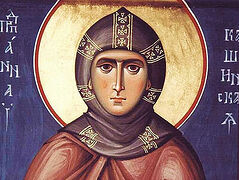
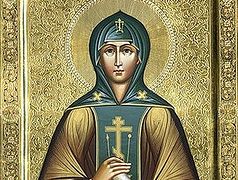
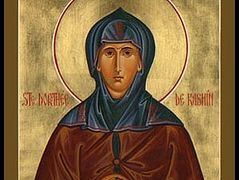
The Russian Orthodox Church marked the 375th anniversary of the first glorification of St. Anna of Kashin this week.
St. Anna, the 13th–14th-century princess and nun, is unique in the Orthodox Church in that she was canonized, decanonized, and canonized again.
The Russian Church canonized her as a saint in 1649. However, in 1678, Patriarch Joachim had her decanonized because Old Believers venerated her extensively—partly because her incorrupt body displayed the two-fingered Sign of the Cross that Old Believers practiced, rather than the three-fingered sign required by official Church policy after 1656. Despite attempts to reposition her hand, it always returned to the two-fingered position.
 Photo: tvereparhia.ru
St. Anna’s veneration was restored in 1909 when the Holy Synod designated June 12/25 as her feast day, with Grand Duchess Elizabeth Feodorovna attending the restoration celebrations in Kashin. Annual processions with her icon became a tradition thereafter.
The festivities on June 25 began with a procession from the Ascension Cathedral in Kashin to the Resurrection Cathedral. The Divine Liturgy was celebrated by His Eminence Metropolitan Ambrose of Tver and Kashin with local and visiting clergy, reports the Tver Diocese.
The church was filled with Orthodox faithful. At the center was a decorated shrine with St. Anna’s relics.
 Photo: tvereparhia.ru
“St. Anna bore the feat of chastity, unconditional obedience to God’s will, meek submission and faithfulness to her husband, and then the feat of inconsolable widowhood, adorned with monastic rank. Her entire life was accompanied by feats of love for the poor, mercy, and constant help to those in need,” the diocese writes.
Prayers for Holy Rus’ were read during the service. After the dismissal, a prayer was read before the holy relics, which were then carried in procession to the Ascension Cathedral, where a festive meal was held.
In his remarks, Met. Ambrose encouraged married couples to follow the example of St. Anna of Kashin, who after outliving her husband St. Michael of Tver by 50 years and fulfilling her duties as Grand Princess and mother, withdrew to Kashin in her later years to take monasticism and dedicate her remaining life to spiritual pursuits that “bring a person closer to deification.”
 Photo: tvereparhia.ru
He called upon Christian couples who have raised their children to independence and completed their major life responsibilities to consider entering monasteries together and taking monastic vows, noting that this was common practice before the Russian Revolution when families in Ostashkov would take vows at the Nilo-Stolobenskaya Hermitage after their children became self-sufficient.
Rather than simply seeking care in old age, he urged believers—especially widowed women—to serve the Church and monasteries with their talents, education, and physical abilities, viewing their final years as an opportunity to “worthily and righteously end their lives according to Christian faith.”
Follow OrthoChristian on Twitter, Vkontakte, Telegram, WhatsApp, MeWe, and Gab!