Bucharest, July 1, 2025
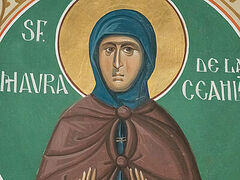
 Nun Platonida (Lady Despina Milița). Photo: doxologia.ro Another six holy women have been proposed for canonization in the Romanian Orthodox Church.
Last year, the Romanian Church canonized 16 male martyrs, confessors, and ascetics of the 20th century, and 2026 has already been designated as the Commemorative Year of Holy Women (Myrrh-bearers, Martyrs, ascetics, wives, and mothers).
According to His Beatitude Patriarch Daniel the Year of Holy Women will also be marked with 16 canonizations, reports the Basilica News Agency. They will likely be proclaimed on the Sunday of the Myrrh-bearing Women. Five canonizations were already proposed earlier this month by the Synod of the Metropolis of Moldavia and Bukovina and the Synod of the Metropolis of Bessarabia.
And during the session of the Synod of the Metropolis of Muntenia and Dobrogea, comprised of ten dioceses, Pat. Daniel presented another six holy women for canonization next year:
-
Lady Maria Brâncoveanu (†1729), wife of St. Constantine Brâncoveanu
-
Schemanun Filofteia Antonescu from Pasărea Monastery (†1833), mother of St. Calinic of Cernica
-
Nun-Martyr Evloghia Țârlea from Samurcășești Monastery (†1949)
-
Schemanun Elisabeta Lazăr from Pasărea Monastery (†2014)
-
Nun Platonida (Lady Despina Milița) (†1554), wife of Voivode St. Neagoe Basarab
-
Măndalina (or Magdalena) Milenco (†1962), a worthy and industrious believer of the Romanian community from Mălainița, of the Timoc Vicariate in Serbia
Maria Brâncoveanu’s husband and four sons, Constantin, Ștefan, Radu, and Matei, who were martyred by Ottomans in 1714, were already canonized by the Romanian Church in 1992.
Pat. Daniel spoke about the need to compose liturgical texts and paint icons in parallel with the canonization procedures. Speaking about the canonizations proclaimed this year, His Beatitude noted that they have produced great joy in dioceses, in schools, during religion classes, and at competitions.
“It’s very interesting how these children love the saints and paint their icons without having seen them personally in life. Why? It’s not simply a formal, juridical, canonical act, but one with great spiritual and pastoral-missionary fruitfulness. That is, it doesn’t rely only on the work of the institution, but especially on the work of Divine grace through the saints. That’s why the Psalmist said: Wonderful is God in His saints!”
Follow OrthoChristian on Twitter, Vkontakte, Telegram, WhatsApp, MeWe, and Gab!