Moscow, July 10, 2024
 Vakhtang Kipshidze. Photo: RIA News
Satanism cannot be legal in a country founded on traditional values, was the assessment of Vakhtang Kipshidze, Deputy Chairman of the of the Synodal Department of the Moscow Patriarchate for Church and Society Relations, in an interview with RIA News concerning the Russian General Prosecutor’s initiative to recognize satanism as an extremist movement.
Earlier, Russian Federation Prosecutor General Igor Krasnov had filed a lawsuit seeking to recognize the organization, “International Satanist Movement,” as extremist and to ban it in Russia.
“The Church believes that satanism cannot be legal in any state that proclaims traditional values as the core of its identity. Banning satanic organizations from the legal sphere is the only possible solution within this logic. Besides religious considerations, there is expert-confirmed evidence that the legally existing satanist environment is a breeding ground for criminal activity,” Kipshidze told the agency.
“The ‘International Satanist Movement,’ which the Prosecutor General has demanded to ban, is a general term for various groups that practice the cult of satan,” said State Duma Deputy Vitaly Milonov to Gazeta.Ru. He added that satanists have no place in Russia.
“[The ‘International Satanist Movement’] is an umbrella term for different groups that worship satan. These include so-called art groups, musical groups, social organizations, religious associations—all of which believe they worship satan. So overall, this is a perfectly appropriate name to use in order to fully ban satanists in our country,” Milonov said.
According to the Ministry of Justice website, a court session to recognize the International Satanist Movement (also referred to as the International Movement of Satanists) as an extremist organization and to prohibit its activities in Russia is scheduled for July 22.
Prior to this, a roundtable was held in the State Duma on combating satanism. Lawmakers, military officials, and clergy proposed declaring satanism an extremist movement, arguing that it should be considered a direct threat to statehood. Meanwhile, Vyacheslav Leontyev, head of the executive committee of the public movement Cultural Front of Russia, compared satanism in Russia to early German Nazism, which “did not commit such crimes at the beginning of its development.”
Meanwhile, the “Church of Satan”, which was founded in 1966 in San Francisco, has been treated as a lawful religious organization under U.S. law., and even gained tax-exempt status from the IRS in 2019.
Although the majority of Americans understand how destructive such “worship” is, the U.S. legal system distinguishes belief (which is protected) from behavior (which may be regulated)—as if belief did not lead to behavior.
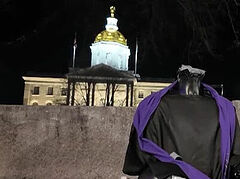
As a result, a statue to Baphomet was installed at “Satanic Temple” headquarters in Salem, Massachusetts, and attempts were made to install one on public, even government property in Detroit, Michigan and Little Rock, Arkansas—which attempts were rejected or legally blocked. The Temple continues its efforts to push statues of Baphomet—satan—on the American public, despite the fact that serious crimes have been directly connected with proponents of this movement.
Follow OrthoChristian on Twitter, Vkontakte, Telegram, WhatsApp, MeWe, and Gab!