Mesopotamo, Albania, July 24, 2025
 Photo: orthodoxianewsagency.gr
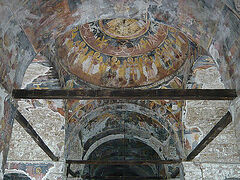
Archaeologists and conservators from the European Center for Byzantine and Post-Byzantine Monuments have made a remarkable discovery at the Church of St. Nicholas in Mesopotamo, Albania, uncovering intact frescoes hidden beneath white-painted walls.
 Photo: orthodoxianewsagency.gr The colorful paintings, depicting saints and reaching heights of 25 feet, were found during conservation work at the historic church in northern Epirus. According to Flora Karagianni, director of the Center, such discoveries are rare in monument research.
The frescoes appear to have been preserved for hundreds of years beneath the white walls. Initial analysis suggests the pigments were derived from plants, as synthetic dyes did not exist at the time. The expensive nature of these materials indicates that a wealthy patron likely funded the church’s decoration.
“Usually we know about the frescoes and we conserve them. To have white walls and suddenly see figures and faces appearing beneath them is a great joy and revelation,” Karagianni told the Athens-Macedonia News Agency. “This didn’t happen anywhere else.”
According to civil engineer Leonidas Pappas, who has graduate studies in monument restoration and formerly served as president of Omonia representing Greeks in Albania, tradition holds that the St. Nicholas Monastery was built during the reign of Byzantine Emperor Constantine IX Monomachos (around 1050 AD).
 Photo: orthodoxianewsagency.gr
During the 40-year rule of Albanian leader Enver Hoxha, all monastery buildings were destroyed except the church, which survived as a cultural monument. It was among 350 churches that escaped demolition when religion was legally banned in the country, avoiding conversion into agricultural storage facilities.
 Photo: orthodoxianewsagency.gr
The conservation work is being carried out under a cooperation agreement signed in 2021 between Centre president and professor emeritus of Byzantine Archaeology Natalia Poulou and Albania’s then-Minister of Culture Elma Margariti, with funding from the Greek Ministry of Culture.
The project represents the second phase of work, following initial structural stabilization by Albania’s Institute of Monuments. Conservation of the frescoes is scheduled to continue and be completed by 2026, with collaboration between the Centre and Albania’s Institute of Monuments, practical support from the municipality of Phoenice, and backing from the Greek embassy in Tirana and the consulate general in Gjirokastër.
Follow OrthoChristian on Twitter, Vkontakte, Telegram, WhatsApp, MeWe, and Gab!