Balikesir, Turkey, September 4, 2025
 hurriyetdailynews.com
Archaeologists excavating the ancient city of Antandros in northwestern Turkey have uncovered a Roman villa that was converted into a baptistery after Christianity became the official religion of the Roman Empire in 380 AD.
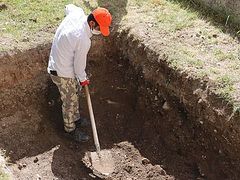
The discovery was made during excavations led by Professor Gürcan Polat of Ege University’s Department of Archaeology. The team has been working at the Antandros site, located near Mount Ida in Balıkesir province, for 24 years, reports Hurriyet Daily News.
The uncovered structure measures approximately 23.6 feet by 19.4 feet and features marble flooring with elaborate wall frescoes. At the center of the room, archaeologists found a step-down baptismal pool measuring about 3 feet in diameter, with three steps leading down from both the east and west sides.
“Initially designed as a Roman villa, the space was later converted into a baptistery following the adoption of Christianity as the official religion,” Polat explained. The original structure dates to around 300 AD, when it served as part of a luxurious Roman residence.
The excavation revealed two distinct layers of wall decoration. The first fresco layer dates to the villa’s original construction around 300 AD. After the building’s conversion to religious use in the mid-5th century, the walls were redecorated with vegetal motifs and panel designs popular during that period. These later decorations are currently obscured by a thick layer of lime deposits, which the team is carefully removing.
Additional evidence of the building’s Christian use includes a Christian monogram carved into the plaster on one wall, along with niches typical of early Christian architecture. The team has opened new trenches on both the eastern and western sides to better understand the full layout of the religious complex.
Antandros, founded in the 8th century BC, was an important settlement in the ancient Troad region overlooking the Gulf of Edremit. The city flourished during the Roman period and is mentioned in ancient sources as one of the ports visited by the Trojan hero Aeneas on his journey to Italy. Previous excavations at the site have uncovered lavish Roman villas with intricate mosaics, a necropolis, and olive oil production facilities.
The discovery adds to a growing body of archaeological evidence illuminating early Christian history in Anatolia, where Christianity spread rapidly in the centuries following Christ’s Resurrection and became deeply rooted in local communities.
OrthoChristian recently reported on another archaeological find: Ancient dam reveals origins of Pool of Siloam where Jesus healed the blind.
Follow OrthoChristian on Twitter, Vkontakte, Telegram, WhatsApp, MeWe, and Gab!