Riga, November 13, 2025
 Photo: pareizticiba.lv
Festive services were held yesterday at the UNESCO-protected church of St. Alexander Nevsky in Riga to mark 200 years since its consecration on November 12, 1825.
His Grace Bishop John of Jelgava, vicar to His Eminence Metropolitan Alexander of Riga, prayed at the service, which was celebrated by all the clergy of the church, the Latvian Orthodox Church reports.
Following the Divine Liturgy, a solemn thanksgiving moleben was served, during which prayers of gratitude were offered to God for the hierarchs, clergy, parishioners, and all benefactors and donors of the church. A memorial litany was then served for all departed builders, benefactors, donors, rectors, clergy, and parishioners of the church from all ages, with special commemoration of the principal donors and builders of the church.
After the proclamation of many years, Bp. John of Jelgava addressed those gathered with a sermon. He noted that a solemn service marking the anniversary will also be held on the church’s patronal feast day, December 6, the feast of St. Alexander Nevsky, and invited all to take part in the celebration.
Historical background
 Photo: pareizticiba.lv
The history of the parish of St. Alexander Nevsky in Riga dates to the 1730s. In 1731, a church in honor of the Live-Giving Spring Icon of the Mother of God was built for the Riga garrison hospital, which had been established by order of Peter I during the Northern War with Sweden. After various reconstructions and repairs, the church existed until July 11-12, 1812, when it was destroyed by fire during the burning of buildings in the St. Petersburg and Moscow suburbs by order of Riga’s military governor following reports of the approach of French troops to Riga.
Fundraising soon began for construction of a new wooden church in honor of St. Alexander Nevsky, the Heavenly patron of Emperor Alexander I, who had achieved victory in the war with Napoleon in 1812. The laying of the church’s foundation took place on April 28, 1820, on Alexander Boulevard, and construction lasted five years. Part of the funds were donated by Emperor Alexander I, and part were allocated by the Holy Synod.
 Photo: pareizticiba.lv
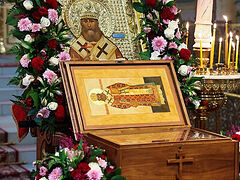
The consecration of the church took place on October 31, 1825 (November 12 new style). The venerated church icon of the Life-Giving Spring Mother of God and many other ancient icons saved from the 1812 fire remain in the church to this day.
The old wooden church is located in the historic center of the city, which was included in the UNESCO World Heritage List in 1997. The church is recognized as a unique cultural and historical monument of Orthodox wooden church architecture from the first quarter of the nineteenth century and has the status of a monument of national significance. The church has never closed, and services have always been celebrated daily.
Follow OrthoChristian on Facebook, Twitter, Vkontakte, Telegram, WhatsApp, and MeWe!