Kythira, Greece, December 10, 2025
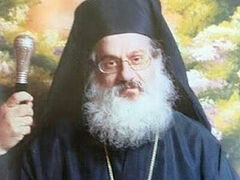
 Photo: orthodoxianewsagency.gr
His Eminence Metropolitan Seraphim of Kythira and Antikythira of the Orthodox Church of Greece has issued a lengthy statement addressing the recent meeting joint prayer between Patriarch Bartholomew of Constantinople and Pope Leo XIV of Rome, raising concerns about ecumenical relations and Orthodox tradition.
The statement, titled “An Exact Exposition of the Orthodox Faith” after the work by St. John of Damascus, was prompted by the recent events marking the 1,700th anniversary of the First Ecumenical Council in Nicaea and the Feast of St. Andrew the First-Called at the Patriarchate of Constantinople.
Met. Seraphim notes that the anniversary celebration “did not have, as would have been expected, a Pan-Orthodox gathering through the participation of the Most Blessed primates of the Autocephalous Orthodox Churches. Two out of 14 primates participated.” He attributes this to the presence of the Pope, whose participation was, as he states, contrary to the holy canons.
The Metropolitan expresses concern that since the lifting of mutual anathemas 60 years ago, “the prohibition of communion with the excommunicated, heretics, heterodox and schismatics, which the holy canons stipulate, has unfortunately weakened, and thus prayer services with heterodox, and even with those of other religions, are observed in the name of love.”
He questions the theological dialogues between Orthodox and Roman Catholics, stating they “are stagnating, according to the confession of their official representatives.” Met. Seraphim calls for the rejection of the branch theory and the two lungs concepts, as well as decisions from Toronto and Porto Alegre that were “completely anti-Orthodox and anti-traditional.”
Regarding the joint declaration by Pat. Bartholomew and the Pope about continuing dialogue “in truth and love” toward “the hoped-for restoration of full communion,” Met. Seraphim writes: “It would be a work of prayer for the full application of the Pauline phrase ‘speaking the truth in love,’ with the abolition of the Unia and the annulment of innovations in matters of Orthodox Faith and Tradition, as well as the heresies that emerged after the schism of the Papists (1054).”
The Metropolitan also expresses concerns about the common Paschalion (unified Easter date), recounting an incident where a Roman Catholic woman approached for Holy Communion in one of his churches, saying “now we are brothers.” He warned this “leads to the common chalice, without the presuppositions!”
Met. Seraphim concludes that the events in Nicaea and Constantinople “troubled and displeased” those “who possess spiritual discernment according to God with consistent Christian life,” while satisfying those “who viewed this movement with humanistic criteria.”
He states: “The application of the Pauline phrase ‘speaking the truth in love,’ with the precise Christian meaning and significance of these two terms—truth and love, evangelical truth and Christian love—constitutes the only solution to the problem.”
Follow OrthoChristian on Facebook, Twitter, Vkontakte, Telegram, WhatsApp, and MeWe!