Kiev, December 16, 2025
 Photo: uoc-news.church
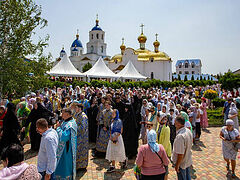
On December 15, the Kiev Theological Academy and Seminary held its first observance of the second feast day honoring St. Peter (Mogila), Metropolitan of Kiev and founder of the Kiev theological schools.
St. Peter (Mogila) was canonized by the Holy Synod of the Ukrainian Orthodox Church on December 6, 1996, at the initiative of His Eminence Metropolitan Vladimir of Kiev and All Ukraine, with his solemn glorification taking place on December 15 of that year at the Kiev Caves Lavra.
The Holy Hierarch’s primary feast day falls on December 31/January 13. However, because this date occurs during the Christmas holiday period, the Academic Council—with the blessing of His Beatitude Metropolitan Onuphry of Kiev and All Ukraine—established December 15 as an additional date for liturgical commemoration by all faculty, students, and seminarians, reports the Information-Education Department of the canonical Ukrainian Orthodox Church.
 Photo: uoc-news.church
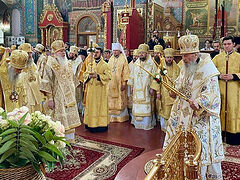
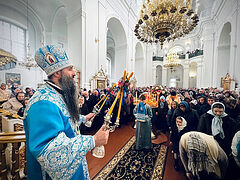
The celebrations began with an All-Night Vigil in the Academic Church of St. John of Damascus, led by His Eminence Archbishop Sylvester of Belogorod, rector of the Academy and Seminary. On the feast day itself, His Eminence Metropolitan Clement of Nizhyn celebrated the Divine Liturgy, joined by the rector, other hierarchs, faculty, students, and guests.
During the Liturgy, prayers were offered for peace in Ukraine and for those who have lost their homes.
***
 Photo: kdais.kiev.ua
The Kiev Theological Academy traces its origins to 1615, when Elisey Pletenetsky founded a school at the Brotherhood Monastery in Kiev. In 1632, St. Peter (Mogila) merged it with a Lavra school to create the Mogila Collegium.
St. Peter made significant contributions to Orthodox education and scholarship. The Kiev-Mogila school and the collegia he founded in Vinnitsa and Kremenets trained a new generation of Orthodox clergy and theologians. His published works included the Leitugiarion (1629), a corrected service book with explanations of the Liturgy; the Pentecostarion (1631) with explanations of Church hymns; and the Euchologion (1646), containing rites of the Sacraments and instructional texts for pastors.
In 1640, a council at St. Sophia’s in Kiev examined the Orthodox Confession he compiled with Igumen Isaiah (Kozlovsky), which received support from various patriarchs and influenced Orthodox peoples for generations. While Orthodox education under St. Peter bore outward resemblance to Catholic approaches common in European universities of that era, his work represented an Orthodox response to the new cultural and intellectual conditions of his time.
Follow OrthoChristian on Facebook, Twitter, Vkontakte, Telegram, WhatsApp, and MeWe!