Kiev, January 23, 2026
 Photo: 5.ua
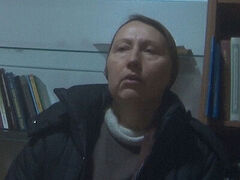
In a recent interview, Ukrainian religious scholar, political scientist, and historian Andrei Kovalev acknowledged that despite the results of sociological surveys, the Ukrainian Orthodox Church remains the stronger Church with more devoted actual believers.
A number of surveys since the war began in February 2022 claim that only 4–6% of Ukrainians identify with the canonical Ukrainian Orthodox Church, while the popularity of the schismatic “Orthodox Church of Ukraine” has supposedly grown exponentially.
At the same time, the churches seized by the OCU stand largely empty, while the faithful of the UOC build new churches and cram into temporary spaces to continue worshiping.
It should also be noted that the organizations running the surveys, such as the Kyiv International Institute of Sociology, skew the results by asking not whether respondents identify simply with the Ukrainian Orthodox Church, but with the Ukrainian Orthodox Church-Moscow Patriarchate.
In his interview with 5.ua, Kovalev comments on sociological surveys and actual church-goers. It’s clear throughout the interview that he is very much against the canonical Ukrainian Orthodox Church and isn’t above distorting the truth of the ecclesiastical situation in Ukraine. Nevertheless, he does acknowledge that
the structures of the UOC-Moscow Patriarchate, or simply the Ukrainian Orthodox Church—call them what you will—still have several million supporters in Ukraine. I’m not specifically citing the exact number stated by UOC representatives themselves, but several million remain.
And turning to sociology, he states:
We must understand that the Church’s strength lies not in real estate, not in church buildings, but in believers, in those people who enter these churches. If we look at sociology, we see that in recent years, especially after the start of Russian aggression, the level of trust in the Orthodox Church of Ukraine [the schismatic group—OC] is growing, while the level of trust in the Moscow Patriarchate in Ukraine or the Ukrainian Orthodox Church [the canonical Church—OC] is falling.
But this sociology could only be trusted if the UOC and OCU weren’t religious organizations, but political parties and, for example, participants in parliamentary elections.
The reality of the UOC and OCU can’t be captured in mere surveys, Kovalev explains:
Completely different methods of studying trust need to be applied to religious organizations, namely taking into account the voices of practicing Christians, practicing members of the Church, who literally vote with their feet at every service, literally every Sunday, and go to the churches of one confession or another.
Because those people who claim during sociological surveys that they have a good or positive attitude toward the Orthodox Church of Ukraine are mainly people who don’t go to church, aren’t members of an active church and, unfortunately, might not even go to church.
Instead, there are organized, committed parishioners of the UOC who vote with their feet and go to its churches every Sunday and every feast day [emphasis added].
He continues:
And the number of these people is not decreasing. They continue. Because UOC believers are precisely characterized by discipline and organization [emphasis added].
Follow OrthoChristian on Facebook, Twitter, Vkontakte, Telegram, WhatsApp, and MeWe!