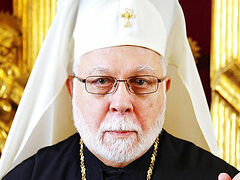
Tartu, Estonia, February 4, 2026
 Photo: postimees.ee
Estonia’s Supreme Court (Riigikohus) held a four-hour public hearing today in Tartu yesterday to consider President Alar Karis’ petition challenging amendments to the Churches and Congregations Act as unconstitutional.
The law was first passed on April 9, 2025, but President Karis declined to promulgate it twice before it was passed for a third time on September 17, prompting his October 3 petition to the Supreme Court.
Present at the hearing were representatives of the President’s Office, the Riigikogu’s Legal Affairs Committee, the Ministry of Justice, the Ministry of Internal Affairs, the Estonian Orthodox Christian Church (EAÕK), the Pükhtitsa Convent, and the Estonian Council of Churches, reports postimees.ee.
President Karis argues that the law disproportionately restricts freedom of religion and association, with the concept of “threat” defined too vaguely and too broadly, while existing legal tools are sufficient to address security concerns without interfering in religious doctrine.
The Riigikogu's Legal Affairs Committee and the Ministry of Internal Affairs defended the law's necessity, arguing it serves the legitimate purpose of protecting Estonia's security and constitutional order. The law targets only activities unrelated to spiritual life—such as propaganda and disinformation—and does not interfere with matters of faith, representatives argued. Attorney Alar Jõks explained that the law aims to prevent Estonian religious organizations from being dependent on foreign centers that pose security threats. "We saw in Ukraine's example that such connections carry security risks," Jõks said.
 Representatives of the Estonian Orthodox Christian Church at a Supreme Court hearing. From left to right: Attorney-at-Law Artur Knyazev, Bishop Daniel (Lepisk), Attorney-at-Law Steven-Hristo Evestus. Photo:SILLE ANNUK/Tartu PM/Scanpix Baltics
Ringo Ringvee, head of the Ministry of Internal Affairs’ Religious Affairs Department, addressed questions about why individual deportations would be insufficient. “This isn’t a random problem, but a systemic one,” Ringvee explained. “We expel one person, and they send another just like him. This cannot be dealt with through targeted measures.”
The Estonian Orthodox Christian Church and Pükhtitsa Convent argued that the law was written specifically to restrict the EOCC due to its ties with the Moscow Patriarchate. Church representatives contended that requiring them to change their canonical subordination violates legal predictability and uses undefined concepts that allow for arbitrary application. They argued the measure may actually increase threats by causing feelings of injustice and discrimination.
The Estonian Council of Churches, while condemning Kremlin support for the war in Ukraine, expressed concern that the state is interfering with one Church’s self-determination, thereby creating a dangerous precedent.
Chief Justice Kõve stated that a decision is expected by the end of March.
Follow OrthoChristian on Facebook, Twitter, Vkontakte, Telegram, WhatsApp, MeWe and Gab!