Crete, March 31, 2026
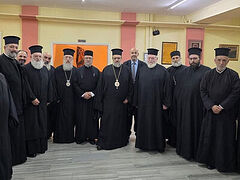
 Photo: athoniteusa.com
The Holy Eparchial Synod of the Church of Crete has issued a statement affirming the theological significance of holy icons and defending their presence in public spaces, as a European court deliberates a landmark case that could affect the display of religious symbols across the continent.
The Synod says its statement was prompted by “a dialogue that has recently developed regarding the presence of holy icons and Christian symbols in public life,” and aimed at reminding the faithful of the Orthodox Church’s teaching on the icon’s deeper meaning, reports Romfea.
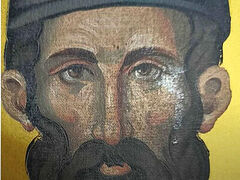
The Synod emphasizes that in the Orthodox Church, the holy icon “is not simply a religious symbol or merely an element of art,” but is bound up with the Church’s faith that God became man and was made manifest in the world. Veneration of icons of Christ, the Theotokos, and the saints is directed not toward the material image itself but toward the persons depicted—in accordance with the teaching of the Seventh Ecumenical Council that “the honor given to the icon passes to its prototype.”
The statement situates icons within a broader cultural and civilizational context, noting that in Crete, the rest of Greece, and throughout the Orthodox world, icons “constitute an experiential element of the expression of faith, life, and culture.”
The Synod affirms that the Orthodox Church “fully respects the freedom of conscience of every person and does not seek to impose faith, which is always offered freely,” and maintains that the presence of icons in public spaces “does not restrict anyone’s freedom” but constitutes an expression of the history, tradition, and spiritual identity of the people.
The statement concludes by calling attention to this age of materialism and spiritual relativism, in which the faces of Christ, the Theotokos, and the saints depicted in icons serve as a reminder that “man does not live without roots, but within a living faith, within a civilization shaped over the course of centuries, which continues to illuminate the path of our life.”
The statement comes as the European Court of Human Rights is deliberating the case of Union of Atheists v. Greece, in which atheist applicants have challenged the display of Orthodox icons in Greek courtrooms, arguing they violate rights to a fair trial and freedom of religion under the European Convention on Human Rights. A ruling is expected in the first half of the year.
Follow OrthoChristian on Facebook, Twitter, Vkontakte, Telegram, WhatsApp, MeWe and Gab!