Veliky Novgorod, September 22, 2026
 Photo: foma.ru
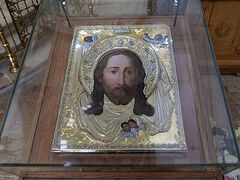
Restorers have returned a restored 15th-century fresco of the Theotokos to St. Sophia Cathedral in Veliky Novgorod, reassembling an image that existed only in scattered fragments for roughly 300 years.
The fresco, “The Mother of God with the Child Enthroned,” was created in 1466 at the order of Archbishop Iona of Otnja. Workers apparently knocked it off the wall in the late 17th century during major renovations at the cathedral, when the floor level was raised and the remnants of the old painting ended up buried in construction fill, the press service of the Novgorod Museum-Reserve reported to Foma.
The composition wasn’t rediscovered for centuries. Historian and archaeologist Mikhail Karger found the first fragments in 1956 while studying the cathedral’s southern section. In the 1990s, keepers of the cathedral found more scattered pieces of ancient paintwork in rubble between an existing excavation area and one of the pillars, and the “Mother of God with the Child Enthroned” composition gradually started to take shape as they pieced them together.
 Photo: foma.ru It was later determined that unidentified fragments from Karger’s own collection, held in the Novgorod museum’s archives, belonged to the same fresco. Matching up all the recovered pieces confirmed the original theory.
Restorers at the Novgorod Museum-Reserve assembled the scattered pieces of the ancient painting into a single composition, essentially rebuilding a lost image out of construction debris.
The return took place yesterday, on the feast of the Nativity of the Most Holy Theotokos. Sergei Bryun, the museum’s general director, called it a historic event not only for Veliky Novgorod but for all of Russia and Orthodox Christians everywhere. He said that returning it to St. Sophia was especially important given that its original location within the cathedral’s fresco program was known.
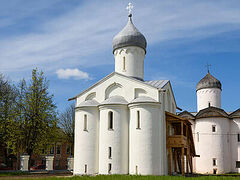
Bryun thanked Russia’s Ministry of Culture, and Minister of Culture Olga Lyubimova personally, saying this marks the third such treasure returned to Novgorod with her involvement. He named the other two as the rescued 12th-century Church of Sts. Peter and Paul on Sinichya Gora and the 15th-century Volotovo Crucifixion icon, which was returned from Germany.
 Photo: foma.ru
Ivan Lykoshin, director of the Russian Ministry of Culture’s Department of Museums and Circus Arts, also spoke at the handover, calling the event a living testament to dialogue between different strands of cultural and public life at a time when society needs unity. He said the composition is a major monument hidden from Russians for centuries and now restored through the work of museum staff, calling it the result of years of painstaking restoration work that returned one of the era’s key artifacts to Novgorod’s main cathedral.
Follow OrthoChristian on Facebook, Twitter, Vkontakte, Telegram, WhatsApp, and MeWe!