Vilnius, October 23, 2026
 Photo: orthodoxy.lt
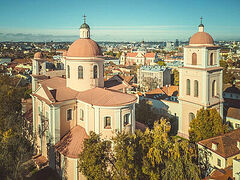
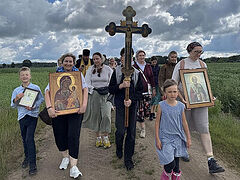
Monks of Vilnius’s Holy Spirit Monastery and parishioners of the city’s St. Paraskeva Church are telling Parliament they won’t switch to the Patriarchate of Constantinople, no matter what the bills before lawmakers say.
Both communities have sent appeals to Parliament over two bills that would open the way to seizing several ancient churches and the monastery from the Lithuanian Orthodox Church, and could strip it of its status as a traditional religious community, reports the Lithuanian Orthodox Church.
The brethren reject any such initiatives, “based on political suspicions and fictitious accusations,” the monastery’s appeal says. It also stresses that the monks have no right or intention to change their church jurisdiction or move to the Patriarchate of Constantinople.
The appeal recalls that the monks backed Lithuania’s independence in the early 1990s, together with their then abbot, the late Metropolitan Chrysostom (Martishkin). They never imagined that Orthodox believers in a free, democratic Lithuania and member of the European community would again face threats reminiscent of the Soviet past, including pressure on the Church and attempts to seize religious property.
The parish assembly of St. Paraskeva Church has also appealed to Parliament.
“Our parish is a Lithuanian-speaking Orthodox community in which services have been held in Lithuanian for more than 20 years,” the parish’s statement says. “We state clearly and unambiguously that we have no intention of changing our current Church (canonical) affiliation or moving under the jurisdiction of other Patriarchates and exarchates. Such decisions can’t be imposed against the will of parishioners or by pressuring them.”
Parishioners of other churches named in the bills plan to appeal to Parliament as well.
His Eminence Metropolitan Innokenty of Vilnius and Lithuania has also written to the country’s top leaders, expressing the Orthodox community’s concern that the proposed legislation doesn’t conform to constitutional norms.
The bills were introduced by Audronius Ažubalis and Arvydas Anušauskas, members of Parliament from the Homeland Union-Lithuanian Christian Democrats. As the Church Council noted earlier, one bill would let the Patriarchate of Constantinople’s Lithuanian Exarchate be named the sole representative of Orthodox believers in the country, and the other would set a legal basis for handing it the churches and monasteries in question.
The Church’s representatives spoke about the issue at a press conference on October 20 at the Cathedral of the Mother of God in Vilnius. His Grace Bishop Ambrose of Trakai, dean of Vilnius, presented the Church’s position together with local clergy.
According to Bishop Ambrose, the legislative initiatives against the Lithuanian Orthodox Church are justified by a threat to national security, but no concrete facts confirm that such a threat exists.
He emphasized that the Constantinople Exarchate in Lithuania is an artificial, politicized project initiated by politicians and former clergy of the Lithuanian Orthodox Church who took the path of schism. It doesn’t enjoy broad support among the country’s Orthodox community, he said. Services held by the former priests, who have been defrocked, draw very small crowds. If Orthodox churches were handed to the Constantinople Exarchate, the parishioners would leave them and the churches would stand empty, the bishop stressed.
He also voiced concern over attempts to import the Ukrainian religious conflict into Lithuania, and stressed that Ukraine can’t serve as an example for Lithuania of respecting believers’ rights.
Fr. Sergei Kazarinov, secretary to Metropolitan Innokenty, reminded those present that, according to the Constitutional Court of Lithuania, the state can’t revoke a decision recognizing a religious community as traditional. In its December 6, 2007, ruling, the Court explained that a religious community’s traditional status doesn’t depend on the will of the legislator. It’s a historically formed state of the religious organization’s relationship with society, which the state recognizes rather than creates.
The participants of the press conference also confirmed the Lithuanian Orthodox Church’s anti-war position. The overwhelming majority of its members are Lithuanian citizens who are patriots of their country.
Follow OrthoChristian on Facebook, Twitter, Vkontakte, Telegram, WhatsApp, and MeWe!