Moscow, July 25, 2025
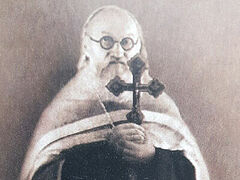
 St. John Domovsky. Photo: livejournal The Holy Synod of the Russian Orthodox Church established two new feasts during its session yesterday.
Archpriest John Domovsky, a married priest of the 19th-20th centuries was canonized for local veneration in the Don Metropolitanate, and the feast of the Rostov Tenderness Icon of the Mother of God was established, reports Patriarchia.ru.
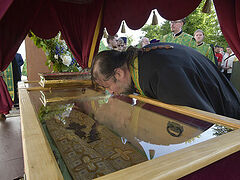
Righteous John of Rostov will be celebrated on February 24/March 9, the day of his repose, and August 27/September 9, the day of the reburial of his remains in 2020.
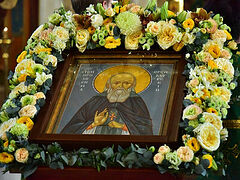
The Rostov Tenderness Icon will be celebrated on March 19/April. 1
***
St. John Domovsky was born on March 30, 1844, in the village of Pokrovskoye, Ekaterinoslav Governorate, in the family of Deacon Alexei Domovsky. From an early age, he helped his father in the altar, loved the services, and was passionate about Church singing. From 1859 to 1865, he studied at Ekaterinoslav Theological Seminary. After graduation, he married Maria Gosoporova. They had four daughters.
On August 30, 1866, St. John was ordained to the priesthood and assigned to St. Nicholas Church in the village of Vasilyevka, Slavyanoserbsky District.
He distinguished himself as a preacher, missionary, Church composer, and zealous pastor. A special calling that largely determined St. John’s destiny was his obedience as a religious instructor and mentor. His love for the destitute and needy remained in people’s memory as a bright and edifying example.
In 1896, he was sent to serve in the city of Nakhichevan-on-Don (now a district of Rostov-on-Don). He was widowed before the beginning of World War I, and lived out the rest of his days there. He was the spiritual father of many priests, monks, and laypeople, including Hieromartyr Zachary (Lobov), Archbishop of Voronezh.
During the difficult years of the Civil War, St. John proved himself as a steadfast pastor and adherent of Patriarch St. Tikhon. He firmly denounced the Renovationists, which saved many clergy and laypeople from the temptation to join their schism.
Being already retired, in the difficult 1920s, St. John continued his ministry, receiving thousands of people at his home and celebrating the Sacraments of the Church, prayerfully comforting those who came to him. Many testimonies of his clairvoyance, miracle-working, and prayerful intercession have been preserved.
St. John peacefully reposed in the Lord on March 9, 1930, and was buried at Sofia Cemetery in Rostov-on-Don. His veneration began immediately after his repose and over the years spread more and more among believers.
Already in the 1950s, the collection of testimonies about the holiness of his life and miracles performed through his prayers began and have continued to the present time. In our days, cases of healing from infertility, from cancer, and other miracles that occurred after prayer at his burial site have been documented.
***
 Rostov Tenderness Icon. Photo: monasterium.ru In 1911, the miraculous healing of a 10-year-old resident of Rostov from epileptic seizures was witnessed after the Most Holy Theotokos appeared to her and molebens were served at her instruction before the Tenderness Icon of the Mother of God in a nearby church. After the testimonies of this miracle were documented, on March 19, 1911, a solemn glorification of the icon took place, which was led by Bishop Joseph (Petrovykh) of Uglich, vicar of Archbishop Tikhon of Yaroslavl and Rostov—the future St. Tikhon of Moscow and All Russia.
The widespread veneration of the image that developed by the mid-1910s, not only in Yaroslavl but also in other provinces, is confirmed by the distribution of copies. For example, a copy of the icon was sent to St. Nicholas Church in Kazan at the request of its parishioners.
In 1913, Tsar Nicholas II with all his children prayed before the Rostov Tenderness Ion and several months later so did Grand Duchess Elizabeth. Veneration of the icon continued throughout the years of persecution. State archives of the Yaroslavl Province preserve petitions from 1925 to hold processions with the image.
In the pre-revolutionary press, 28 cases of help and healings through prayers before the Rostov Tenderness ICon were published. The image is widely venerated to this day: pilgrimage groups arrive annually from all over Russia to pray before it.
Follow OrthoChristian on Twitter, Vkontakte, Telegram, WhatsApp, MeWe, and Gab!