In the name of the Father, and of the Son, and of the Holy Spirit!
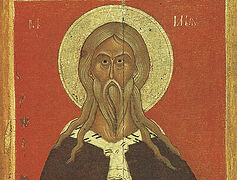
Today, the Orthodox Church reverently honors the memory of the holy Prophet Elias, who lived many centuries before the Birth of Christ. A prophet is, first of all, God’s chosen one, an interpreter, expounder of the Word of God and a herald of His will. The purpose of the prophetic ministry was to destroy iniquity and implant righteousness. Not only did the prophets explain the Law of God to people, but also demanded that they fulfill it. They exposed human sins and instilled high morals in the people. The Lord said to the Prophet Jeremiah: See, I have this day set thee over the nations and over the kingdoms, to root out, and to pull down, and to destroy, and to throw down, to build, and to plant (Jer. 1:10).
The holy Prophet Elias was such a chosen one of God, a destroyer of wickedness, a preacher of righteousness and a guardian of morality of the people. He served during the reign of the impious King Ahab of Israel, when, at the instigation of his even more impious wife Jezebel, he introduced the worship of the idol of Baal instead of worshipping the One True God. By order of the king, human sacrifices were offered to the idols of Baal and Ashtoreth brought by Jezebel from a foreign land, children were burned in front of them, all kinds of abominations were committed, and festivals were celebrated, marked by rowdiness and debauchery. All this was leading to the moral decay of the people, the humiliation, devaluation of the human personality, and the spiritual death of the soul. The holy Prophet Elias, God’s chosen one, strengthened by the grace of the Holy Spirit, set about fighting idolatry and idolaters courageously and with great zeal. The Book of the Wisdom of Jesus the Son of Sirach says: Then stood up Elias the prophet as fire, and his word burned like a lamp (Sir. 48:1).
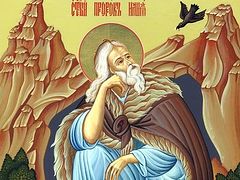
As a punishment for the idolatry and wickedness of the people, the holy Prophet Elias predicted that there would be no rain or dew in the land of Israel for three and a half years, and there would be severe drought and famine. All this came true, and so the holy prophet, who was living in a desert by a brook, also had nothing to eat, and ravens, by God's command, brought him food every day. When the brook from which St. Elias had drunk water dried up, God commanded him to go to a certain place and stay with a pious but poor widow there, who provided him with food and drink. For this, through the prophet’s prayers, throughout the famine her meager supplies of flour in a pot and oil in a jug did not run out, although she had nowhere to get either and nothing to buy them with. These were sent by God, Who fills the hungry with good things. The widow’s son died, but the Prophet Elias prayed to God and He raised him from the dead.
Dear brothers and sisters, imitate the poor widow who fed the prophet, and be sure that not only will you never become poor by giving alms, but you will receive both a great reward from the Lord in this earthly life and glory in Paradise.
When the three and a half years of drought and famine had passed, St. Elias came from the desert to the king, denounced him for his idolatry and invited him to assemble all his people and priests on a mountain and find out who was the True God. When the people assembled, the holy Prophet Elias turned to them and said: “If my God Whom I serve faithfully is the True God, then believe in Him; if the idol Baal is God, then follow him. There are hundreds of priests of Baal here, but I am alone. I will put up an altar, and you put up one, too. Let us lay firewood and calves onto them and pour water over them without making a fire. Then call upon your gods, and I will invoke mine, and let the God Who hears the prayers and sends fire down be recognized as the True God.” They did as the holy prophet suggested. But no matter how hard the priests of Baal prayed to their idol in their own way (shouting, jumping and slashing themselves with swords until they bled), there was no voice or answer from it. But as soon as St. Elias had prayed to his God, fire came down from heaven and consumed not only the sacrifices and the firewood, but also the water they had been poured with. Then all the people fell to the ground and cried out: “The God of Elias is the True God—let us worship Him.” Out of his zeal for his faith in the Lord, the Prophet Elias had the priests of Baal killed and then announced the imminent rain, which immediately came.
When the impious Ahab, in accordance with the insidious scheme of his wicked, cunning and domineering wife Jezebel, put to death the innocent poor peasant Naboth by stoning and took away his vineyard, the Prophet Elias, who was feared no man, came to his palace as a formidable messenger from Heaven to expose the king. Seeing him, Ahab trembled and said, Hast thou found me, O mine enemy (3 Kings 21:20). Ahab’s conscience started speaking in terror when the prophet told him the terrible words from God: Hast thou killed, and also taken possession?... Thus saith the Lord, In the place where dogs licked the blood of Naboth shall dogs lick thy blood… The dogs shall eat Jezebel (3 Kings 21:19, 23).
Thus, there was only one person in the whole kingdom—the Prophet Elias—who proved to be stronger and braver than all those who should have prevented the innocent Naboth from being condemned to death. After all, the royal authorities, advisers, judges, and all the nobility knew perfectly well that Naboth was being treated lawlessly, but they shut their eyes to it and did not intercede for the poor man so as not to incur the king’s wrath and lose their benefits and privileges.
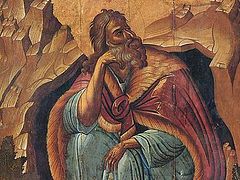
The holy Prophet Elias’s life was so pleasing to God that he was vouchsafed a special vision of the Lord on Mount Horeb. In the days of sorrowful experiences, when iniquity was triumphant and the life of the holy Prophet Elias was in danger, God revealed His presence to him after a storm, earthquake and fire in a still small voice as a sign that He (God) is not so much a formidable Avenger to those who do evil, punishing the wicked by storm, earthquake and fire, as a merciful Father, Who loves His children and chastises people not out of enmity and malice, but out of His mercy in order to bring them to reason, reform them and save them from eternal torment. For his faithfulness, zeal for the glory of God and holiness, the Prophet Elias was taken to Heaven alive.
Dear brothers and sisters! Great was the faithfulness of the Prophet Elias to the Lord, and great was the power of his prayer. Let us imitate his virtues: prayer, abstinence and humility. But above all, let us love zeal for the glory of the True God. I say “above all” because this virtue is almost completely forgotten among us. If others hurt our dignity in any way, we lose our temper and are even ready to die for it. But the honor and dignity of our faith, of the sacraments, of our Redeemer and future Judge, and our common Mother—the Church—is to many, nothing. If others say whatever they please against everything holy, no one will say a word in defense; rather, many will find pleasure in such words. Isn’t this a clear sign that such people have no faith in their hearts—that they are secret pagans?
Let us emulate St. Elias by a good example, by personal respect for all that is sacred, by kind words and instructions, and most importantly by our virtuous personal lives; let us pray for each other, deeply believing in the power of prayer. Let us strive to become as zealous for the truth as was the Prophet Elias.
Holy great prophet of God Elias, pray to God for us! Help us strengthen our faith, our prayer, and our desire to live according to the truth of God. Amen.