Photo: foma.ru
On the Mountain wast Thou transfigured, O Christ God,
and Thy disciples beheld Thy glory as far as they could see it;
so that when they would behold Thee crucified,
they would understand that Thy suffering was voluntary,
and would proclaim to the world,
that Thou art truly the Radiance of the Father!
(Kontakion of the Transfiguration)
Why was Christ the Savior transfigured on Mt. Tabor before His disciples Peter, James, and John? The Church hymn answers: “So that when they would behold Thee crucified, they would understand that Thy suffering was voluntary, and would proclaim to the world, that Thou art truly the Radiance of the Father.”
The time of our Savior’s sufferings was approaching. Soon was to come the boundless humiliation of our Lord: He would be taken into custody and led to trial; an unlawful trial against Him would begin, they would condemn Him to the shameful death of crucifixion, they would beat Him, spit upon Him, mock Him, and then in view of all, at the place of the skull, they would deliver Him to execution. What could the disciples of the Savior think at this moment of the terrible suffering of their Divine Teacher? “Who is He? Why does He allow these torments? Can He really not lay low all His enemies? Does it mean the enemies are stronger than the Savior?” And so it was necessary to strengthen the faith of the Lord’s disciples.
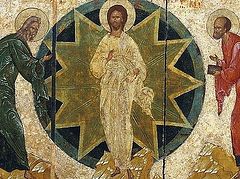
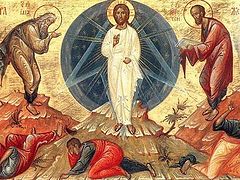
On Mt. Tabor, the Savior shows His glory as God: The Savior is wondrously transfigured before His disciples—His face radiates like the sun and His clothes become white as light. Two great men of the Old Testament appear—Moses and Elijah. God the Father Himself testifies that this humble Christ the Lord is the Son of God and calls us to obedience to Him (Mt. 17:1–5). The disciples saw this glory of the humble Christ the Savior and were assured that their Teacher was not only true man, but also true God. Let them not be troubled, then, when they see their Savior in disgrace. Not because the Savior couldn’t avoid suffering, but because such was His good will—this is why He endured these terrible torments. Therefore doth My Father love me, because I lay down My life, that I might take it again. No man taketh it from Me, but I lay it down of Myself. I have power to lay it down, and I have power to take it again (Jn. 10:17–18).
What does the Transfiguration of the Lord have to do with us, beloved? Our Lord and Savior is being reviled before our eyes also. Today, many are crucifying Jesus Christ again (Heb. 6:6). The Lord God is not only not recognized by many of our contemporaries, but is slandered in every possible way. Some who are weak in spirit are troubled at the sight of these obvious blasphemies and ask why the Lord tolerates such ridicule.
“He obviously doesn’t exist,” they say, “for if He did, he would manifest His power against blasphemy.” Don’t be troubled by all this, beloved. Just as Christ the Savior accepted the shameful sufferings of Calvary of His own free will, so now by His Divine will, or rather, by His allowance, the faith and the Church are being mocked. The Lord is the same yesterday, and to day, and for ever (Heb. 13:8). And we should say in such instances: “Thy will be done…”
That they “would proclaim to the world, that Thou art truly the Radiance of the Father…” The Apostles would go out to preach to the entire world. Soon, after His glorious Resurrection and Ascension into Heaven, the Lord and Savior will send His comforting Spirit upon the Apostles, and He will give them wondrous power to enlighten all those in darkness and lead them to God. The Apostles will go out into the world and teach men all that the Savior taught them, and through Baptism will bring men to the Church of God (Mt. 28:19–20, Acts 2:47). And when the Apostles are asked: “How is the crucified Christ God? Why did He allow Himself to be so mocked?” they’ll say: For we have not followed cunningly devised fables, when we made known unto you the power and coming of our Lord Jesus Christ, but were eyewitnesses of His majesty (2 Pt. 1:16). And we, beloved, being assured that Christ the Savior is not just a simple man, but also our true God, must proclaim it to those who don’t believe in God. Let your voice be weak, for its strength lies in truth and your conviction.
We mustn’t remain silent about Divine teaching, for this is our duty. If we possess the truth, is it possible to conceal it? If we have real, undoubted happiness—in life with God—can we not share this happiness with those who don’t have it?
Amen.