Dear brothers and sisters, today we have the opportunity to be convinced once again that the gates of hell will never prevail over the Church of God.
In the early twentieth century, the entire State machinery set itself the goal of eliminating Orthodoxy in Russia. Much was done to achieve this goal: churches were destroyed or desecrated, icons and spiritual literature were burned, monastic and parish communities were abolished and ruined, and tens of thousands of people who called themselves disciples of Christ were executed or exiled. And it did not last for years, but for whole decades, with periodic lulls, but successive lulls meant a sneaky stab in the back and not a weakening of oppression.
It is clear from objective logic that for the persecutors, the Church in Russia should have ceased to exist long ago, that it should have remained somewhere in the distant past, becoming one of the forgotten aspects of society before the Revolution, but for some reason this is not the case. Churches and monasteries are still being restored and built, new films and spiritual books are dedicated to God, and we gather in churches to pray and receive Communion. Of course, even now we are periodically shaken by troubles, and internal and external problems make us continuously alert, struggling with the temptations and trials that befall both the whole Church and each one of us.
But in spite of everything, the spiritual life in our Fatherland continues. It continues by the grace of God and thanks to the spiritual feats of the ascetics of piety, who always labor quietly and modestly to ensure that others have more time for repentance, a virtuous life, and reform.
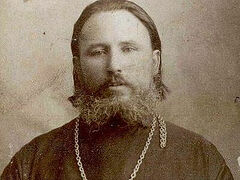
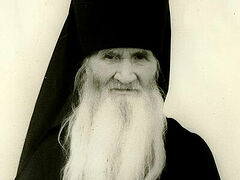
In the context of the above, the podvig of those who testified to our Lord Jesus Christ in the Solovki Archipelago (situated at the mouth of Onega Bay in Russia’s Arkhangelsk region) is of paramount importance to the Russian Church. From 1923 until 1933, it was turned into a prison, into a “special correctional labor camp”, where “political criminals” and “ideological enemies” languished in the harshest conditions, and their backbone was clergymen and active parishioners. Emaciated, hungry, beaten, abused by satanic swearing, and crippled by the fierce malice of sadistic wardens, the ascetics of Solovki remained faithful to God, with love in their hearts, patience and humility, as well as the hope of salvation from bondage to sin and the law of death.

They regarded the privations of earthly life as a kind of “blast furnace” that allowed them to get rid of the “slag” of sin. It was the lack of retaliatory bestial hatred and thirst for revenge that helped the New Martyrs and Confessors of Solovki endure all their sufferings and hardships to the end and show the world a model for true Christians and genuine Christian piety.
Today, while prayerfully commemorating these saints, whose sweat and blood cemented and reinforced the walls of the Russian Church, we can strengthen our faith, draw inspiration to be faithful to the Church, and be emboldened in the fight against evil—which does not slumber but hides and waits for an opportunity to sink its poisonous teeth into the body of the Church of Christ.
The Gospel readings for today’s feast say much that will help us live up to the trust of the New Martyrs and Confessors of Solovki. Namely, we have heard that God’s faithful children will be cursed, persecuted, slandered, condemned unjustly, and even killed, but the Lord will not forsake them. The Holy Spirit will not forsake us in the hour of trouble, teaching us how to act and putting the right words into our lips so that we should not sin against the Truth. To do this, we need to be as wise as serpents that do not rush to attack and do not get into dangerous places in search of adventure. And at the same time, we must be as gentle as doves so as not to intrigue, not to slander, not to resort to diabolical methods of attaining our goals, not to walk all over others and sponge on others: “Let them fall, and I’ll crawl somehow, hiding behind the backs of those who are moving forward towards victory.”
You and I have heard that in the end times there will be many terrible wars, epidemics, natural disasters, and many persecutions of the Church of Christ. However, we should not be afraid of these. The most important thing is not to flinch, but to remain faithful to God. None of us can be separated from the love of God save by our conscious choice—our own renunciation of the Heavenly Father. This is the only thing what you and I as Christians must fear. At the same time, as we have also heard, numerous false prophets will confuse human minds, leading them away from the Truth and rushing their victims into the depths of hell. And these are not just sects or heretical teachings. The cult of the self-complacent person who takes all he can from life replaces God with himself. And it is rightly said that the devil cannot make hell attractive, but he can make the path to it attractive; and serving your passions to derive all kinds of pleasures is very tempting, but it leads, as we know, to perdition, because it impels a person to worship himself.
And perhaps the most important thing that we can learn from the Gospel passages we have heard at the Liturgy today and at Vespers yesterday in the context of today’s feast is the words: In your patience possess ye your souls (Lk. 21:19). Work your salvation, and keep your souls, for we also know from the Holy Scriptures that, He that shall endure unto the end, the same shall be saved (Mt. 24:13).

Thus, dear brothers and sisters, today let us ask the New Martyrs and Confessors of Solovki for patience that they possessed in abundance, so that each one of us may acquire a particle of this patience to the extent that we need to overcome trials and temptations in our earthly wanderings. And through fervent prayer, through sincere, simple and kind prayer, and through our words addressed to them, I am sure that we will acquire the virtue of patience. Greetings on the feast, my dears, and may God bless you all! Amen.