Istanbul, September 2, 2025
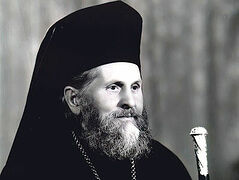
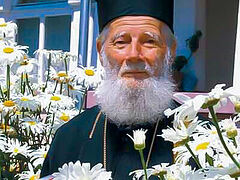
 Elders Dionise (left) and Petroniu (right). Photo: Basilica News Agency
The Holy Synod of the Patriarchate of Constantinople canonized two Romanian elders who lived and labored on Mt. Athos during its session on August 30-31.
The newly canonized saints are Elder Dionisie (Ignat), who lived at the Holy Cell of St. George at Kolitsou, under Vatopedi Monastery, and Hieromonk Petroniu (Tănase) of Prodromu Skete, which belongs to the Great Lavra Monastery. The feast day of St. Dionisie will be celebrated on May 11 each year, while St. Petroniu will be commemorated on February 24, reports the Orthodoxia News Agency.
On August 30, Constantinople also celebrated the official signing of the act of canonization of St. Demetrios Gagastathis, who was numbered among the saints in July.
The Romanian Orthodox Church had proposed Elder Dionisie for canonization in 2021 and Elder Petroniu in 2022, preparing the liturgical texts in Greek for submission to Constantinople.
His Beatitude Patriarch Daniel of Romania, speaking at a Synodal meeting of the Metropolis of Muntenia and Dobrogea, noted that “these two Romanians always maintained their love for their homeland and remained good Romanians. Both Fr. Dionisie (Ignat) and Fr. Petroniu (Tănase) are appreciated not only by Romanians but also by Greek monastics.”
The Patriarch explained that the right to canonize belongs to the Local Church where a person spent the final part of their life and reposed, which in this case is the jurisdiction of Constantinople, as both elders lived on Mt. Athos.
The relics of Elder Dionisie were exhumed at St. George Cell of Kolitsou Skete in November 2022, while the relics of Elder Petroniu were exhumed at Prodromu Skete in April 2023.
The Romanian Church proposed Edlers Dionisie and Petroniu for canonization in honor of the 100th anniversary of the Romanian Patriarchate being celebrated this year. The Romanian Synod canonized sixteen 20th-century martyrs, confessors, and ascetics in 2024 and liturgically proclaimed their glorifications this year as well.
***
St. Dionisie (Ignat) was born on September 22, 1909, in the Vorniceni Commune in Botoşani County.
In the 1920s he went with his brother to the Holy Mountain and was tonsured as a monk in 1927.
Revered by monks and pilgrims from all over the world, Fr. Dionisie distinguished himself in his 78 years of monastic life on the Holy Mountain as a great hermit and the confessor of many Athonite fathers, abbots, hieromonks, hermits, monks, and pilgrims, including Elder Joseph of Vatopedi, a spiritual child of St. Joseph the Hesychast.
He was recognized as a skilled worker of the Jesus Prayer. Fr. Dionisie also had close spiritual ties with St. Paisios, the Hieroschemamonk Ioan Guțu, and Archimandrite Petroniu Tănase, the abbot of the Romanian Prodromu Hermitage.
Elder Dionisie reposed in the Lord on April 11/28, 2004, at the age of 95, being considered one of the greatest clerics of the Holy Mountain.
Elder Petroniu (Tănase) was born in Fărcaşa, Neamţ County on May 23, 1916.
He joined Neamţ Monastery, where he became a monk on September 22, 1942. From Neamţ, he was called to Antim Monastery of Bucharest, where he continued his intellectual formation, graduating the Faculty of Orthodox Theology, and attending courses of mathematics and philosophy. In 1947, he was ordained hieromonk for the Patriarchal Cathedral, and then sent to teach homiletics, catechetics and pedagogy at the Monastic Seminary of Neamţ Monastery.
A hard period for the missionary monk began with the onset of the totalitarian regime, and he was forced to leave Neamţ Monastery in 1959. It was with much courage and zeal for the Church Christ, our Savior, and the same never-ending love for the monastic life that he retired to the community of Sihăstria Monastery in 1964, where he lived till 1978, when he left for the Romanian Skete of Prodromu on Mt. Athos.
The monks of Prodromu elected Fr. Petroniu to be their abbot seven years after his arrival there. During his time as abbot of the Skete (from 1984), he completed much restoration work there. During his abbacy, the walls of the cathedral were painted, a new guesthouse was built, and a convenient road was constructed connecting the Skete to the Lavra.
The blessed Elder was a great spiritual authority not only on Mt. Athos, but also throughout Greece and in his native Romania. The monks of Romanian and Moldavian origin all considered him their spiritual father. His book of spiritual contemplations, The Doors of Repentance, has been translated into several European languages.
Fr. Petroniu was asked to be Patriarch of Romania twice, but he humbly refused.
He reposed in the Lord on February 22, 2011.
Follow OrthoChristian on Twitter, Vkontakte, Telegram, WhatsApp, MeWe, and Gab!