On this present Sunday, my beloved brethren, the Church appoints the reading from the Gospel of the parable concerning a certain householder who planted a vineyard and let it out to husbandmen, to whom he entrusted his vineyard (cf. Matt. 21:33–42). The vineyard was furnished splendidly, with all its necessary elements: a winepress, a tower, and set upon good ground enclosed by a hedge. Yet the husbandmen proved themselves exceedingly deceitful and wicked—not only did they withhold the fruits due to the owner in due season, but they also beat the servants whom the master sent, or slew them outright, even stoning them. And at last, they killed the householder’s only son.
By the householder is to be understood God the Father; by the vineyard, the Jewish Church; by the husbandmen, the chief priests, priests, and rulers, to whom the Jewish Church had been entrusted; by the servants, the prophets, whom God often sent to the people of Israel, and who for the most part were beaten by them; and by the son of the householder, is meant the Lord Jesus Christ, the Son of God.
Yet this parable, brethren, pertains not to the Jews only—it also concerns us, and applies to our own lives. The vineyard of the Lord may and ought to be understood as every Christian soul; the hedge, as the Law of God, by which each soul is or ought to be safeguarded against sin; the winepress or press-vat in the vineyard is our heart, or our inward being, by which we receive the most pure Blood of the Lamb of God, who was slain for our sake; and by the tower or upper chamber is meant the Church of Christ, or the grace of the Holy Spirit dwelling in the Church—establishing our hearts in faith, love, and good works, and lifting us up from earth to heaven, as it is written: Set your affection on things above, not on things on the earth (Col. 3:2).
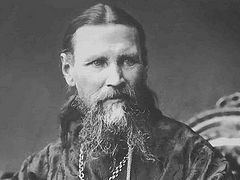
 St. John of Kronstadt So then, brethren, we all are the vineyard of God. And a vineyard is meant to bring forth abundant fruit. But do we offer unto the Lord, our supreme Husbandman, the fruits of good works—the fruits of repentance, faith, love, humility, meekness, kindness, mercy, temperance, purity, patience, longsuffering, and other such virtues? Alas, very little—very, very little indeed do we offer Him. And at times, we offer nothing at all. Instead, we bring forth the fruit of the wild vine, the vine of Sodom and Gomorrah—that is, all manner of vile deeds: pride, malice, envy, greed, fornication, adultery, drunkenness, unbelief, godlessness, murder, and suicide.
The Lord awaits from us the fruits of repentance, correction, and virtue, and oftentimes He waits in vain. We remain what we were: sinners still—barren, withered trees, bearing no fruit.
Many Christians violate and slay their conscience—that servant of God within our soul—and give themselves over without fear to iniquity. Many justify their sins or excuse themselves by the weakness of nature, or by the supposed necessities of fallen, sinful flesh, failing to distinguish between their lusts and passions and true human needs. Some are not even ashamed to slander the Gospel, saying that it demands what is impossible, and they live in complete contradiction to it. Thus they, like the chief priests and scribes of the Jews, do crucify the Son of God afresh within themselves.
But why speak vaguely, saying, many crucify the Son of God? We ourselves, you and I, do often crucify the Son of God within us—by our unbelief, by our anger, our envy, intemperance, gluttony, drunkenness, the uncleanness of our hearts, our negligence, impenitence, laziness, and all our other vices.
What then shall the Lord of the vineyard do with our vineyard—left desolate and overgrown through our negligence—when He cometh to take account of our deeds, and of all our uncleanness and wickedness? The answer is the same that the chief priests and scribes unwittingly pronounced upon themselves: He will miserably destroy those wicked men, and will let out his vineyard unto other husbandmen, which shall render him the fruits in their seasons (Matt. 21:41). That is, He shall give the greatest gift—faith and grace—unto others, who will bring forth fruit in due season, and who, by the help of grace, will abound in all virtue throughout the course of their lives.
Therefore, brethren, while the Lord still gives us time, while the soul is yet in the body, and our vineyard is not yet taken from us, let us diligently tend it, cultivate it, water it with the tears of contrition, and cleanse it by repentance, that it might at last bear fruit unto God.
Amen.