Kiev, September 19, 2025
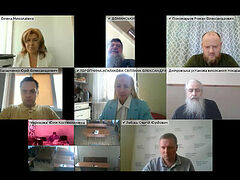
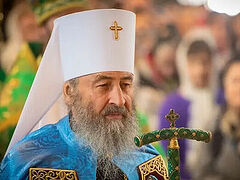
 Photo: spzh.eu
The Security Service of Ukraine (SBU) has sent to court an indictment against four employees of media outlets affiliated with the Ukrainian Orthodox Church, accusing them of treason, according to sources cited by LB.ua.
The case involves staff from the Union of Orthodox Journalists and the First Cossack Channel, which the SBU characterizes as public platforms for spreading pro-Russian rhetoric. The four individuals facing trial include the head of First Cossack Channel, its executive editor, an ideologist-organizer, and a journalist.
They’re charged with creating and leading a criminal organization, violating citizens’ equality based on religious beliefs, state treason, and justifying Russia’s armed aggression. Court hearings are ongoing in these cases.
Despite the open persecution of the canonical UOC, Ukraine seeks to position itself as a paragon of religious freedom before the international community.
Ten other individuals connected to the criminal proceedings are currently wanted, according to sources. Both media outlets have had their hosting blocked in Ukraine by the State Service for Special Communications and Information Protection. Ukraine’s Ministry of Digital Transformation is also seeking to ban these resources internationally on social networks, including YouTube and Telegram.
The SBU has also issued charges in absentia against businessman Viktor Vyshnevetsky, described as a patron of the UOC and sponsor of the mentioned media resources. The SBU has proposed sanctions against Vyshnevetsky, pending approval from the Presidential Commissioner for Sanctions Policy.
This follows a pattern of arrests of journalists covering Church persecution. In March 2024, six journalists from the Union of Orthodox Journalists and human rights activists were arrested and placed in SBU detention on suspicion of “working for the FSB.” These journalists face possible life imprisonment for their reporting on the persecution of the UOC.
It is well known that accusations of cooperating with the FSB are pretexts for persecuting those who speak about the persecution of the UOC. The Union of Orthodox Journalists, for example, publicly opposes the war and supports the UOC’s separation from the Moscow Patriarchate—positions that contradict Russian viewpoints.
Follow OrthoChristian on Twitter, Vkontakte, Telegram, WhatsApp, MeWe, and Gab!