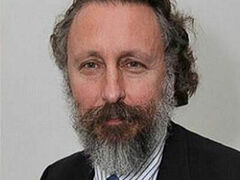
The author, Very Rev. Vladimir Vranic, is an Orthodox priest serving in Montreal, Canada. He holds a Master’s degree in Theology from St. Vladimir’s Orthodox Theological Seminary. His writings explore Church unity, canonical order, and the contemporary challenges facing Orthodoxy.

The question of primacy in the Orthodox Church is not a matter of administrative privilege or political power. It touches the heart of how the Church lives her unity in Christ. In the Orthodox tradition, authority is never an end in itself but a ministry of service within the communion of the faithful. To speak about primacy is to speak about the mystery of the Church herself—a living organism, not a human institution.
From the earliest centuries, the Church has understood that unity and order must coexist in harmony. The first among bishops—the primus inter pares, or “first among equals”—exists not as a ruler above his brothers but as a servant of communion. This principle, expressed in the Apostolic Canon 34, safeguards both freedom and unity: each bishop acts with the counsel of his brethren, and the first acts with their consent. Primacy is therefore an expression of love in order, not domination in power.
The Liturgical Foundation of Hierarchy
The Orthodox understanding of authority is deeply Eucharistic. In every local Church, the bishop presides at the Divine Liturgy as the visible sign of unity. Where the bishop is, there is the Church; and where the Church is, there is Christ. The unity we experience in the chalice is the same unity that the canons seek to protect in ecclesial life.
This means that primacy, in its deepest sense, is liturgical. The first hierarch—whether a metropolitan, patriarch, or primate—presides in love as one who serves the unity of the many. To commemorate the name of one’s bishop or patriarch in the Liturgy is not an administrative act; it is a confession of communion, a visible testimony that the Church gathered in one place participates in the one Body of Christ.
When this Eucharistic logic is forgotten, hierarchy degenerates into bureaucracy, and the canons are reduced to regulations instead of signs of grace. True primacy is never abstract; it is personal, conciliar, and always oriented toward communion in the Holy Spirit.
Primacy and Conciliarity in Canonical Tradition
The Orthodox Church’s canonical order reflects this spiritual vision. The councils of the first millennium established a structure that balanced primacy and conciliarity. Each local Church was autonomous, yet bound in communion with the others. Canonical primacy existed to serve this communion—not to replace it with centralized authority.
This delicate balance was reaffirmed by the Council of Constantinople in 1872, which condemned phyletism. Unfortunately, this term has often been misinterpreted and misrepresented. The council did not condemn the natural connection between a Church and its national or cultural identity. Rather, it condemned the creation of parallel ecclesiastical jurisdictions within the already existing and established canonical territory of another local Church. Such a division tears apart the Eucharistic unity of the Church.
By rejecting this arbitrariness, the 1872 Council upheld the canonical principle that one local Church must not intrude into the territory of another. The purpose of this decision was not to erase local identities, but to preserve the unity of faith and the integrity of canonical order.
The Ukrainian Question and the Challenge of Primacy
The events surrounding the 2019 Tomos of autocephaly in Ukraine have reopened old wounds in the Orthodox world and revealed deep disagreements about the nature of primacy. The Ecumenical Patriarchate’s unilateral action to grant autocephaly to a group previously outside canonical communion has led to painful divisions among the Local Churches.
Supporters have argued that the Patriarch of Constantinople possesses the right to intervene in such matters as the “first among equals.” Critics respond that such intervention violates the very conciliar principles the Orthodox Church has always upheld. The reality is that both sides appeal to tradition, yet interpret it differently.
At the heart of the crisis lies a profound ecclesiological question: Who has the right to act in the name of the universal Church when unity is at stake? In the past, it was the Christian emperor who convoked the Ecumenical Councils, bringing together the bishops of the Church for conciliar deliberation. Today, in the absence of an emperor, this question remains unresolved.
If the “first”—the Patriarch of Constantinople—is himself part of the dispute, can he still be the one to summon a council? And if he refuses, who has the authority to gather the bishops of the Church in conciliar judgment? Until the Orthodox world finds a conciliar answer to this question, any claim to universal primacy will remain contested.
Toward a Eucharistic Vision of Unity
The present crisis is not merely administrative; it is spiritual. The Orthodox Church stands at a crossroads. Will we allow canonical order to serve the unity of the Body of Christ, or will we turn it into a tool of ecclesiastical rivalry?
True primacy must be exercised in the spirit of the Eucharist—as service, not control; as love, not jurisdiction. The first in the Church is called to be the servant of unity, not the source of division. Conciliarity is not a limitation of primacy; it is its very essence.
The canons and the councils, from the Apostles to the Fathers, remind us that authority in the Church is always shared, never solitary. The bishop presides not by his own right but by grace, and always in communion with his brethren. In the same way, the patriarchal primacy must remain bound to the conciliar consciousness of the Church.
If the Orthodox world can rediscover this Eucharistic vision of primacy—grounded in humility, shared responsibility, and the mystery of communion—then even the present wounds can become a path to healing. The Church’s unity does not depend on power, but on truth lived in love.
Conclusion
The question of primacy is not a matter for ecclesiastical diplomacy, but for repentance and renewal. The Orthodox Church does not need new structures of control; she needs a return to the spirit of the Fathers—to the conciliar, Eucharistic vision that shaped her canons and sustained her unity through the centuries.
In our time of division, let us remember that the only true authority in the Church is the authority of the Cross. To preside in the Church means to stand first in sacrifice and service. When primacy is exercised in this way—in obedience to Christ, and in communion with the brethren—then the Church will again shine forth as the undivided Body of Christ, “one, holy, catholic, and apostolic.”