Sohag Governorate, Egypt, January 20, 2026
 Photo: Ministry of Tourism and Antiquities
Archaeologists from Egypt’s Supreme Council of Antiquities have discovered the remains of a complete Byzantine-era monastic complex at the Al-Deir site in Sohag Governorate. Officials say the find is the most comprehensive of its type in the region.
The monastery, built entirely of mudbrick, includes several rectangular buildings measuring between 26 by 23 feet and 46 by 26 feet. The structures feature plastered walls with built-in niches and contain rectangular halls, some with apsidal structures at their eastern ends for prayer and worship, reports La Brújula Verde.
Attached to these communal spaces are small vaulted chambers that served as individual monks’ cells. The complex also includes courtyards on the southern side that functioned as main entrances, and circular structures believed to be refectory tables where the community gathered for meals.
 Objects found in the monastic complex. Photo: Ministry of Tourism and Antiquities
The excavation revealed storage facilities and tanks built from red brick and limestone, coated with waterproof red mortar for storing water or supporting the monastery’s economic activities.
The main discovery is a large mudbrick church, approximately 46 by 33 feet, oriented east to west. The basilica follows a traditional tripartite plan with a central nave, choir, and sanctuary. Mudbrick pilaster bases in the nave suggest the space was covered by a central dome. The semicircular apse at the eastern wall is flanked by two small rooms used for preparing Eucharistic elements.
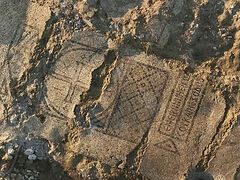
Among the artifacts recovered are storage amphorae bearing inscriptions that may indicate contents or ownership, ostraca (pottery fragments) with Coptic writing, daily utensils, and limestone slabs with Coptic inscriptions, possibly from commemorative stelae or tombstones.
Dr. Mohamed Ismail Khaled, Secretary General of the Supreme Council of Antiquities, said the findings contribute substantially to understanding monastic life in Upper Egypt during Byzantine rule. The evidence points to a self-sufficient monastic community that inhabited the site during that period.
Follow OrthoChristian on Facebook, Twitter, Vkontakte, Telegram, WhatsApp, and MeWe!