Kaunos, Muğla Province, Turkey, October 15, 2025
 Photo: hurriyetdailynews.com
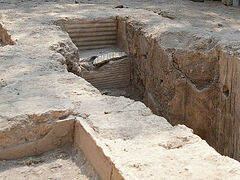
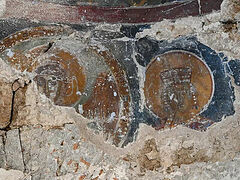
Archaeological excavations at the ancient city of Kaunos in southwestern Turkey have uncovered a Byzantine church built directly over a Roman-era hospital complex, revealing over a millennium of continuous use at the site.
The discovery was made in the archaic fortification monastery zone of Kaunos, located in Muğla Province’s Köyceğiz district. The ancient city, inscribed on UNESCO’s World Heritage Tentative List, is known for its 2,400-year-old rock-cut tombs, 5,000-seat theater, basilicas, baths, agora, sacred areas, and 1,300-year-old mosaics, reports Anatolian Archaeology.
According to Associate Professor Ufuk Çörtük of Muğla Sıtkı Koçman University, who leads the excavations, the team has been working in a Late Antique complex within the monastery area for the past three years. The lower level of the structure, dating to the 2nd and 3rd centuries AD, functioned as a Roman valetudinarium—a military hospital that later treated civilians as well.
“Based on the materials we unearthed, we can say that the first phase of this complex, dating back to the second and third centuries A.D., served as a health center or hospital,” Çörtük stated. The excavation team discovered numerous surgical instruments and medical tools at the site, which is located close to the ancient harbor and features a courtyard surrounded by rooms, consistent with other Roman-era hospitals.
The church structure, dating to the 6th century AD, was built on the upper level of the hospital complex. “This year, we completely uncovered it, and it turned out to be a beautiful church in an excellent state of preservation,” Çörtük said. “It is now clear that the hospital complex of the third century was transformed into a religious center during the Christian period with this church.”
The excavations, conducted within the framework of the Heritage for the Future Project, also revealed that the site continued to be used during the Turkish-Islamic period. A coin from the Aydınoğulları Beylik (Aydınid Principality) was found during this year’s work. Archaeologists also previously uncovered a mosque and tomb at the site from later periods.
Çörtük noted that the complex began use in the 2nd century AD and continued through four or five distinct phases until the 14th century, representing continuous occupation from the Roman Imperial period through the Byzantine era and into the Turkish period.
Kaunos was one of ancient Caria’s most important port cities, connecting Anatolia to the Aegean Sea.
Follow OrthoChristian on Facebook, Twitter, Vkontakte, Telegram, WhatsApp, and MeWe!