Archpriest Theodor Verevkin is the honorary rector of the Church of the Protection of the Most Holy Theotokos in Cherkizovo (Pushkino Deanery, Sergiev Posad Diocese).
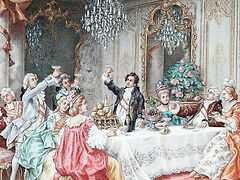
 Artist: Albert Anker
Self-improvement is a false term
—Father Theodor, Great Lent has begun. One remembers previous Lents and realizes that little has changed in life after them…
—I will say at once something rather sad: In my observation, Great Lent rarely changes a person in a real, inward way. It often happens that even very church-going people, who consciously take their church life seriously, begin the fast with inspiration, wishing to change something deeply within themselves—yet by the end it all still comes down to the gastronomic question: “Did I eat something I shouldn’t have?”
And yet, water wears away stone. So it is better to say that a radical change is something rare—a miracle of God—whereas in most cases, gradually, from one Lent to another, something nevertheless does change in a person, if he approaches the fast honestly and sincerely.
—But surely one needs some kind of plan of action: what to struggle against during Lent, what to pay attention to first? There are even Lenten journals now that help people observe the fast consciously.
—First of all, when beginning the fast, one must ask for help from God. We must remember that “self-improvement,” with which many are now preoccupied, is a false term. True perfection is the result of the action of God’s grace.
Throughout the whole of Lent we pray in the Prayer of St. Ephraim the Syrian: “Yea, O Lord and King, grant me to see my own faults.” It is not so simple to see them—this is the fruit of prayer. The holy fathers even say: “It is more joyful for me to see my own sin than to see an angel.”
As for what to struggle against in yourself during Lent—that is entirely individual.
One should reflect on what troubles one most within oneself—and pay attention to that. It differs for everyone. One person cannot forgive a neighbor; another finds his hand reaching for his mobile phone instead of a book.
 Archpriest Theodor Verevkin on the day of his 75th birthday. Photo: Olga Chirkova. —And what is more important to focus on—our personal inner disorder, or our relationships with others?
—All of this is closely connected. Clearly, all problems in our relationships with our neighbors arise first of all from the immoderate assertion of our own “I”: “I want,” “I desire it this way,” “I see it this way,” “This matters to me.” And here, during Lent, one might say to oneself: “Why must I insist? I am fine as I am.” Perhaps then relationships with others will improve as well.
A frequent source of family conflict is when someone does not do what he has been asked (I am not speaking now of serious sins or addictions, but of those everyday trifles that irritate us). In such a case one may say, Well, he didn’t do it—so be it; after all, it is not the first time. Perhaps during Lent one may simply let this issue go. Say to yourself: let there be less of me and less of my opinion during the fast.
Our pride shows itself in the fact that we consider ourselves right in certain matters. Sometimes we do something well, and we begin to exalt ourselves: I can—I! I knew a very well-educated priest from our metropolitanate, now reposed, who always avoided the words “my opinion.” “I have no opinion,” he would say. That is not a Christian approach.” True, there is a kind of syllogistic paradox here: I have no opinion—but that too is my opinion, and so on endlessly. Yet it is good when a person is able to examine, to reflect, to think—not being afraid to relinquish the insistence that one must always have one’s own opinion. In family life and in everything else as well.
We and God: removing all that is unnecessary
As for inner disorder, it often arises from busyness and distraction.
It is very important that there be formed within us a sense of “we and God,” so that nothing superfluous hinders us or throws us off course. Here precisely an informational fast is very important. I always recall in this connection a remarkable priest, a confessor of the faith who endured many deprivations and trials in his life. It would happen that I came to see him and he was watching television—not from morning till night, of course, but he did watch; it was a weakness of his. Yet during Lent the television would be solemnly covered with a cloth and not turned on at all.
That is how it should be: During the fast, strive to concentrate so that as little as possible distracts you from what is essential. Decide what is superfluous for you, what hinders you—the news, perhaps, or something else; for each person it may be different. On the one hand, it may truly be important and necessary; on the other hand, for the time of Lent it should be set aside—unless, of course, it is part of one’s professional duties.
People often worry: How can I not know the news—who said what, where something exploded—not to mention thoughts of an apocalyptic or conspiratorial nature. But I remember in my youth, when I traveled, I once spent a month in completely uninhabited places. In ordinary life you read newspapers and listen to the radio; but when you spend a month without it and then return, you discover that nothing has happened, really.
Nature abhors a vacuum
When you give something up, you must be sure to direct your freed attention and time toward something beneficial. The mind must be occupied with something. We must always remember that nature abhors a vacuum, as Aristotle said.
In ancient monasteries, monks wove baskets not only to earn their living, but so as not to be idle. I remember how distressed Elder Job (Kundrya)—later canonized as a monastic saint—became when while visiting him I decided to help and chopped all the firewood. He was nearly eighty at the time, and his whole life was devoted to inner spiritual labor; yet he needed that simple mechanical work so as not to be idle.
If during Lent you remove everything empty and superfluous, then you must consider how to fill the time that has been freed. Even spiritual broadcasts should be listened to in moderation. I remember when Radio Radonezh first appeared—I would listen for three hours straight in the evening, and afterward I felt overloaded. It should be done in such a way that you listen, and then reflect. Perhaps choose a particular series of talks beforehand and try to listen to it through to the end.
If you do the simplest things attentively, there will be benefit.
Read the Prayer of St. Ephraim the Syrian attentively. Read your prayer rule attentively. Read a good book about Lent (I recently recommended to my parishioners Father Alexander Vetelev’s Lenten sermons), a commentary on the Canon of St. Andrew of Crete, or simply some serious and worthwhile work of literature—from beginning to end.
It is very good to read the Gospel during Lent. There is a well-known recommendation to read the Book of Ecclesiastes during the first week. True, one parishioner told me that for her it was very depressing reading. I agree—there is such a note in there. Ecclesiastes allows one to feel the tragedy and brokenness of the world. Yet it is no accident that during Lent, on weekdays, readings from the Old Testament are appointed at the services: the Church wishes to remind us of the pre-Christian times, to remind us how it was before Christ had come.
And on the other hand, since we are constantly caught up in bustle and immersed in immediate concerns, it can be helpful to step back a little; Ecclesiastes may help one to attune the heart properly.
Set aside anxiety over food preparation
—Father Theodor, is the dietary fast secondary in comparison with the informational fast? Perhaps for modern people it is more important to limit information consumption than to focus on food?
—The gastronomic fast is also important. But nowadays there are so many people with health conditions; not everyone can fast in the same way, and no universal prescriptions can be given here. Still, to give up something especially tasty for you—that is not harmful to one’s health. I know of a case when a young man gave up halva for the entire fast, though it is a Lenten food. But he really loved it, and so it was precisely halva that he did not eat during Lent.
For me, breaking the fast begins when there is great fuss about what else one might eat. What other soy “meat” or cauliflower to buy. As for soy meat—I cannot understand how it can be considered Lenten if it tastes like ordinary meat.
We are all fixated nowadays on variety in food. It would be good during Lent to set aside excessive concern about cooking. For example, to cook a pot of soup for the week and eat it without being distracted by constant preparation—that is fasting. Not thinking continually, What else shall I buy, how else shall I indulge myself, what seafood permitted by the Typikon shall I purchase (and since it costs so much nowadays, perhaps it would indeed be better to help someone with that money than to buy seafood).
Fasting is not only refraining from eating something, but also giving to another what you yourself might have eaten. And this applies not only to food. It is good to visit someone who has long been waiting for us. On the one hand, guests may seem a disruption of the fast; yet we have found time to give attention to this person, tearing ourselves away from our own pressing concerns.
It seems to me that if we concentrate on making things simpler and calmer, creating space for prayer, giving attention to those close to us, setting ourselves the goal of reading or listening to something worthwhile and bringing it to completion—that will be Lent.
And we need not expect anything extraordinary. It is God who perfects us in His own way. We ask Him, “Grant me to see my own faults”—this is always central during Lent. And in everything else—to rejoice that we have this time of fasting, and to live simply.