Beheira Governorate, Egypt, March 26, 2026
 Photo: arkeonews.net
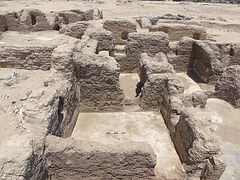
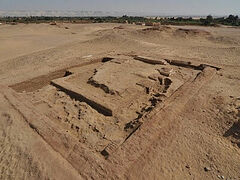
Egyptian archaeologists have uncovered a 5th-century guesthouse structure at the Al-Qalāyā site in the Beheira Governorate, part of what the Supreme Council of Antiquities is calling the second-largest organized monastic cluster in Christian history.
The newly discovered building contains 13 rooms, including monk cells, shared quarters, educational spaces, and guest facilities. A prayer area oriented eastward features a limestone cross set into a niche, reports Arkeonews.
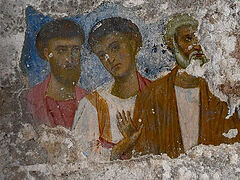
Wall paintings found at the site depict monastic figures alongside plant and geometric motifs, including a mural of two gazelles framed by botanical decoration.
 Photo: arkeonews.net
Among the other finds are pottery, inscribed ceramic fragments, animal bones, seashells, and a limestone funerary inscription in Coptic referencing an individual named “Apa Kyr, son of Shenouda.”
Dr. Hisham El-Leithy, Secretary-General of the Supreme Council of Antiquities, noted that the site preserves some of the earliest known architectural models for organized monastic life.
Excavations at Al-Qalāyā began in 2023 and have so far revealed multiple clusters of monk cells alongside service structures. The site is located in the Nile Delta region rather than Upper Egypt, where early Christian monasticism has traditionally been studied.
Follow OrthoChristian on Facebook, Twitter, Vkontakte, Telegram, WhatsApp, MeWe and Gab!