On other weeks, Friday is associated with fasting, but during Paschal Week that rule is suspended.
History of the Day
The Church does not confine the feast of the Bright Resurrection of Christ to a single night or one Sunday alone. The entire following week remains festal, and each of its days is regarded as part of the one Paschal celebration. Therefore, April 17, 2026, is a full and complete day within the Paschal season.
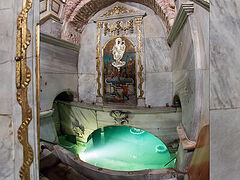
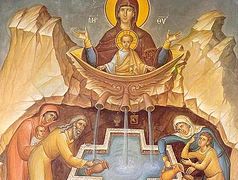
The celebration of the Icon of the Mother of God, the “Life-Giving Spring,” is connected with an ancient Constantinopolitan tradition. According to Church tradition, a revered spring was located near Constantinople, and in time a church was built on that site. The feast was established in memory of the renewal of this church and of the miracles associated with the spring and with the intercession of the Mother of God. In the Church’s liturgical tradition, the Friday of Bright Week thus acquired a distinctly Marian character.
What Takes Place in Church
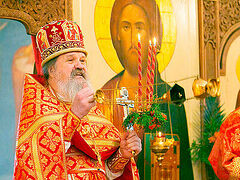
On April 17, the churches continue to observe the Paschal order of services. The Paschal hymns are still sung, and the overall tone of worship remains solemn and triumphant. At the same time, on this day the Church celebrates the Icon of the Mother of God, the “Life-Giving Spring,” so the Friday of Bright Week stands out among the other Paschal weekdays precisely because of its Marian theme.
This day is also associated with the rite of the lesser blessing of water. In Church practice, this rite is especially fitting on the Friday of Bright Week because of the theme of the spring itself. Therefore, in Orthodox tradition, April 17, 2026, is not simply a Paschal day, but a day when Paschal joy is joined to the remembrance of the Mother of God as the Life-Giving Spring.
What May Be Done on This Day
The chief thing that may and should be done on April 17 is to take part in the church service, if that is possible. The Friday of Bright Week remains a festal day, and participation in the divine services is as natural on this day as on any other day of the Paschal week.
One may also continue the Paschal way of life. There is no fasting on this day, even though it is Friday. This is one of the most notable features of the whole of Bright Week.
One may continue to use the Paschal greeting, visit loved ones, continue the home celebration of Pascha, and honor the Icon of the Mother of God, the “Life-Giving Spring.” All of this accords with the character of the day, which unites Paschal joy with the remembrance of the Mother of God.
What Is Considered Undesirable
It is undesirable to treat April 17 as though it were already a completely ordinary weekday. In the Church’s understanding, Bright Week is still continuing, and too hasty a return to everyday bustle does not harmonize with its spirit.
Nor should the meaning of the day be reduced merely to feasting or outward festivity. As on the other days of Bright Week, the center of its meaning remains in the church and in the Paschal services. Even the commemoration of the “Life-Giving Spring” on this day is understood within the Paschal celebration, not apart from it.
Which Saints Are Commemorated on April 17
Venerable Joseph the Hymnographer. He lived in the ninth century and is known as one of the greatest hymnographers of Byzantium. His name is directly connected with sacred poetry: a great number of canons and hymns that entered the Church’s liturgical tradition are attributed to him. For this reason, the commemoration of Joseph is especially fitting in the divine services, where hymnody holds a central place.
On this same day the Church also remembers Venerable George of Maleon. He belongs to the Byzantine monastic tradition of the ninth century and is venerated as an ascetic of strict life. His memory appears in the calendar for April 17 alongside that of Joseph the Hymnographer, adding another monastic figure to the day.
Besides them, the menaion for April 17 includes Venerable Joseph the Much-Suffering of the Kiev Caves, Venerable Zosimas of Vorbozomsk, Venerable Zosimas of Palestine, as well as the Martyrs Pherbutha, her sister, and their servant. This shows that the calendar of the day is quite rich, yet the overall ecclesiastical meaning of April 17, 2026, is still determined above all by the Friday of Bright Week and the celebration of the “Life-Giving Spring.”