El-Araj, Israel, May 14, 2026
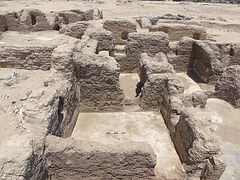
 Two walls set perpendicular to one another. One of the walls dates to the first century AD, while the second dates to the second or third century AD. Photo: dailymail.com
Archaeologists have announced they believe they have discovered the ancient settlement of Bethsaida, a Biblical town where Jesus performed several miracles, at a site called El-Araj on the northeastern shore of the Sea of Galilee.
The identification follows years of excavations that have uncovered substantial evidence linking the site to the New Testament village, reports the Daily Mail.
According to the Gospels, Bethsaida was where Jesus healed a blind man and was located near the site of the miracle of feeding the thousands with a few loaves and fish. The town was also the birthplace of the Apostles Peter, Andrew and Philip.
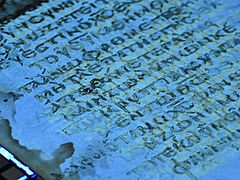
Among the key discoveries are the remains of a Byzantine church, a first-century house beneath its foundation, ancient fishing weights and a mosaic inscription referring to St. Peter as the “chief of the Apostles and keeper of the keys of Heaven.”
 A mosaic referring to St. Peter’s role as the chief Apostle and keeper of the keys to the Kingdom of Heaven. Photo: dailymail.com Speaking in Washington DC on May 5, excavation director Steven Notley said the growing body of evidence has “essentially confirmed” El-Araj as Biblical Bethsaida, a mystery that has puzzled researchers for decades.
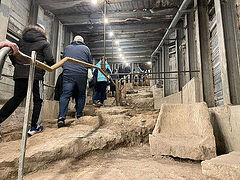
One of the most significant finds was a 1st-century structure buried beneath the basilica’s apse, which researchers say matches an 8th-century account describing a church built over the home of Sts. Peter and Andrew.
“So, we have a 1st-century house wall under the apse,” Notley told EWTN News. “It doesn’t have a plaque on it that says ‘Peter slept here,’ but from a perspective of archaeology, it doesn’t get much better than that.”
The excavations at El-Araj began in 2016 after archaeologists identified the site as a possible match for Bethsaida due to its location along the ancient shoreline and evidence of a 1st-century fishing village. The theory gained momentum in 2017 and 2018 when teams uncovered Roman-era remains and the ruins of a large Byzantine basilica believed to be the long-lost “Church of the Apostles.”
Researchers believe the church was destroyed in an earthquake in 749 AD before being buried beneath layers of sediment and vegetation. In 2025, a wildfire revealed ancient ruins previously hidden by dense underbrush, exposing walls, structural mounds and fragments of Roman-era pottery.
The excavation has become one of the most closely watched Biblical archaeology projects in Israel because Bethsaida is referenced multiple times in the New Testament as a center of Jesus’ ministry.
Follow OrthoChristian on Facebook, Twitter, Vkontakte, Telegram, WhatsApp, MeWe and Gab!